
Strykr Analysis
BearishStrykr Pulse 41/100. Trust is damaged, liquidity is thin, and systemic risk is high. Threat Level 5/5.
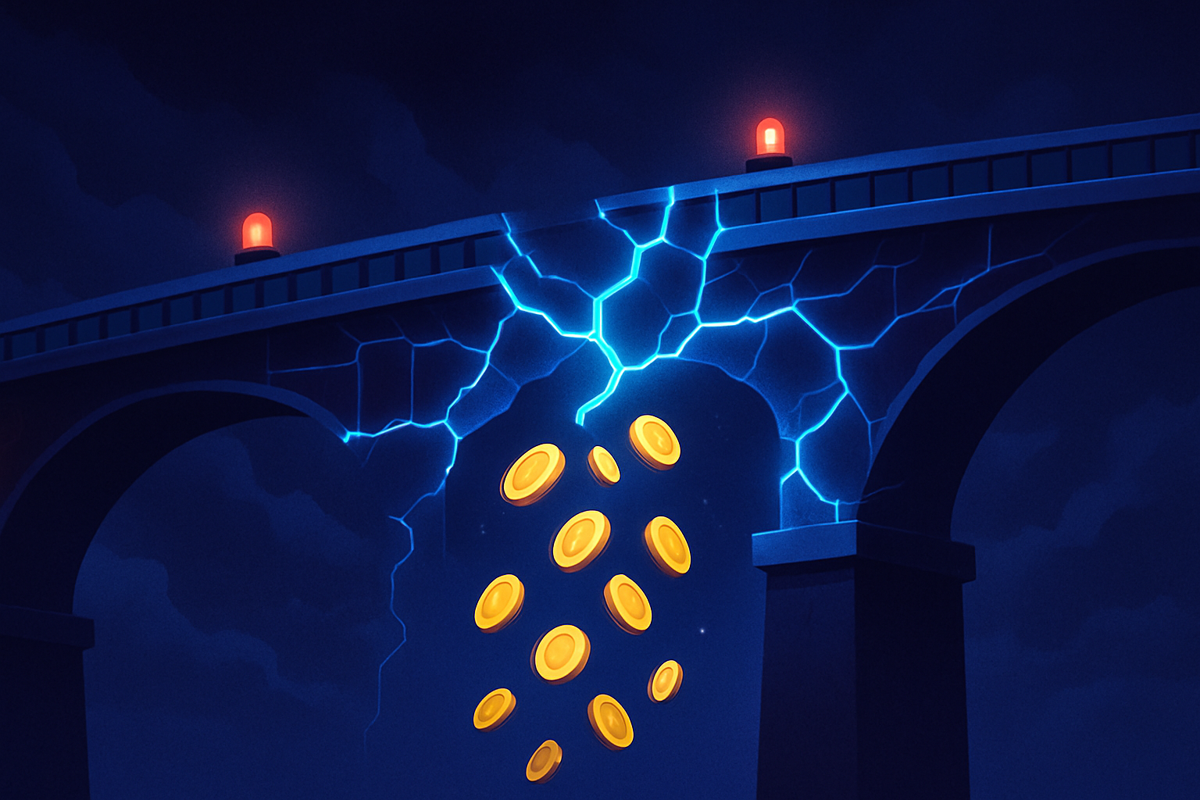
If you want to know what keeps DeFi risk managers up at night, look no further than the $8.45 billion stampede out of Aave this April. Forget your garden-variety rug pulls, this was a full-blown digital bank run, triggered not by a hack, but by a flaw in KelpDAO’s LayerZero bridge. In less than 48 hours, the world’s biggest DeFi lending protocol went from business as usual to the largest withdrawal event in crypto history. The head of Aave is now in damage-control mode, but the scars are fresh, and the lessons are brutal.
Here’s how it unfolded. In late April, a bug in the LayerZero bridge used by KelpDAO sparked panic across the Aave ecosystem. Word spread like wildfire through Telegram and Discord: funds could be at risk, and the bridge wasn’t as bulletproof as advertised. In the next 48 hours, $8.45 billion in deposits vanished as whales, funds, and retail users alike stampeded for the exits. It was the DeFi equivalent of a 1930s bank run, minus the velvet ropes and plus a lot more memes.
The fallout was immediate. Aave’s TVL cratered, on-chain liquidity evaporated, and lending rates spiked as protocols scrambled to shore up reserves. The Aave team responded with a flurry of governance proposals, emergency calls, and a PR blitz. The head of Aave took to Twitter to assure users that the protocol was solvent and the bridge flaw was contained. But in a market where trust is everything and composability is a double-edged sword, the damage was done.
This wasn’t just an Aave problem. The panic rippled through DeFi, hitting other protocols with exposure to the same bridge architecture. The episode exposed the fragility of the entire ecosystem: composability is great until a single point of failure brings the house down. For traders, the message was clear, risk is never just ‘smart contract’ or ‘oracle failure’. It’s the whole stack, and the weakest link can trigger systemic chaos.
The context is ugly. DeFi TVL had already been trending lower as AI mania sucked liquidity out of crypto and into equities. Bitcoin’s drop toward $60,000 last week was a symptom, not a cause. The real story is that leverage had crept back into the system, and when the panic hit, forced selling and cascading liquidations did the rest. The Aave run was the match, but the tinder was everywhere.
The parallels to TradFi are obvious, but the speed is different. In traditional banking, a run takes days or weeks. In DeFi, it’s measured in blocks and confirmed by Etherscan. The transparency is a double-edged sword: everyone can see the outflows in real time, which only accelerates the panic. The fact that $8.45 billion can move in 48 hours is both a testament to DeFi’s efficiency and a warning about its fragility.
The Aave team’s response was textbook crisis management. Emergency governance votes, liquidity incentives, and a full-court press on social media. But the market is unforgiving. TVL has stabilized, but it’s well below pre-crisis levels. Lending rates are still elevated, and risk premiums have widened across the board. The narrative has shifted from ‘DeFi is the future’ to ‘DeFi is only as strong as its weakest bridge’.
For traders, the lesson is clear: composability is a source of both innovation and systemic risk. Every new protocol or bridge is another potential attack surface. The next time you size up a DeFi yield farm, ask yourself not just about the APY, but about the stack of dependencies you’re implicitly underwriting. The market has a short memory, but the scars from this run will linger.
Strykr Watch
Aave’s TVL is still down sharply, with on-chain liquidity at multi-month lows. Lending rates are elevated, with stablecoin borrow rates north of 15%. The protocol’s governance token is struggling to regain its footing, and the bridge ecosystem is under intense scrutiny. Watch for any new governance proposals aimed at risk mitigation, and keep an eye on LayerZero and KelpDAO for signs of renewed stress.
The risk case is straightforward. Another bridge flaw or smart contract exploit could trigger a fresh round of panic. Regulatory scrutiny is mounting, and the Clarity Act is still winding its way through Congress. If trust in DeFi composability breaks down, the entire sector could face a prolonged winter. The market is jumpy, and any negative headline could spark another run.
The opportunity, for those with a strong stomach, is to buy the fear. Aave’s governance token is trading at distressed levels, and lending rates are juicy for those willing to take protocol risk. Look for governance proposals that shore up risk management, and be ready to rotate into protocols with cleaner architecture. The risk/reward is asymmetric, but timing is everything.
Strykr Take
The Aave panic is a wake-up call for DeFi. Composability is powerful, but it’s also a source of systemic fragility. The next bull run will reward protocols that can prove resilience, not just yield. For now, respect the risks, watch the bridges, and don’t get caught leaning the wrong way when the next flaw hits.
Sources (5)
The head of Aave responds to criticism after a historic liquidity crisis
In April 2026, a flaw in KelpDAO's LayerZero bridge triggered $8.45 billion withdrawals on Aave in less than 48 hours, the biggest banking panic in De
Tim Scott says Clarity Act makes Bitcoin safer and more transparent
The Clarity Act could position the US as a global crypto leader by providing regulatory certainty, fostering innovation, and enhancing investor protec
Donald Trump, Benjamin Netanyahu discuss ceasefire in phone call as Bitcoin drops to $63K
Geopolitical tensions impact global markets, highlighting the fragile balance between diplomacy and economic stability amid fluctuating crypto values.
Privacy push as StarkWare and Sui move toward compliance-ready confidential transfers
StarkWare and Sui roll out confidential transfer systems as Zama boosts compliance efforts and Zcash's Orchard bug highlights risks in shielded privac
Chainlink forecast: LINK stays below $8 despite network growth
LINK is down by less than 1% and continues to trade below $8. The coin staged a modest recovery after falling to a two-year low of $6.99 on Saturday.