
Strykr Analysis
NeutralStrykr Pulse 49/100. The market’s flatline is a warning, not a comfort. Threat Level 4/5.
If you’re looking for fireworks in the commodity pits this week, you might want to check the fuse. Despite a cocktail of geopolitical drama that would normally send crude traders into a cold sweat, think Iranian gunfire in the Strait of Hormuz and sanctioned barrels leaking into India at a discount, the broad commodity complex, as tracked by $DBC at $28.55, is as flat as a spreadsheet on a Friday afternoon. Not a blip. Not a twitch. Zero percent change. This is the market equivalent of watching a bomb squad defuse a device, only to discover it’s a dud.
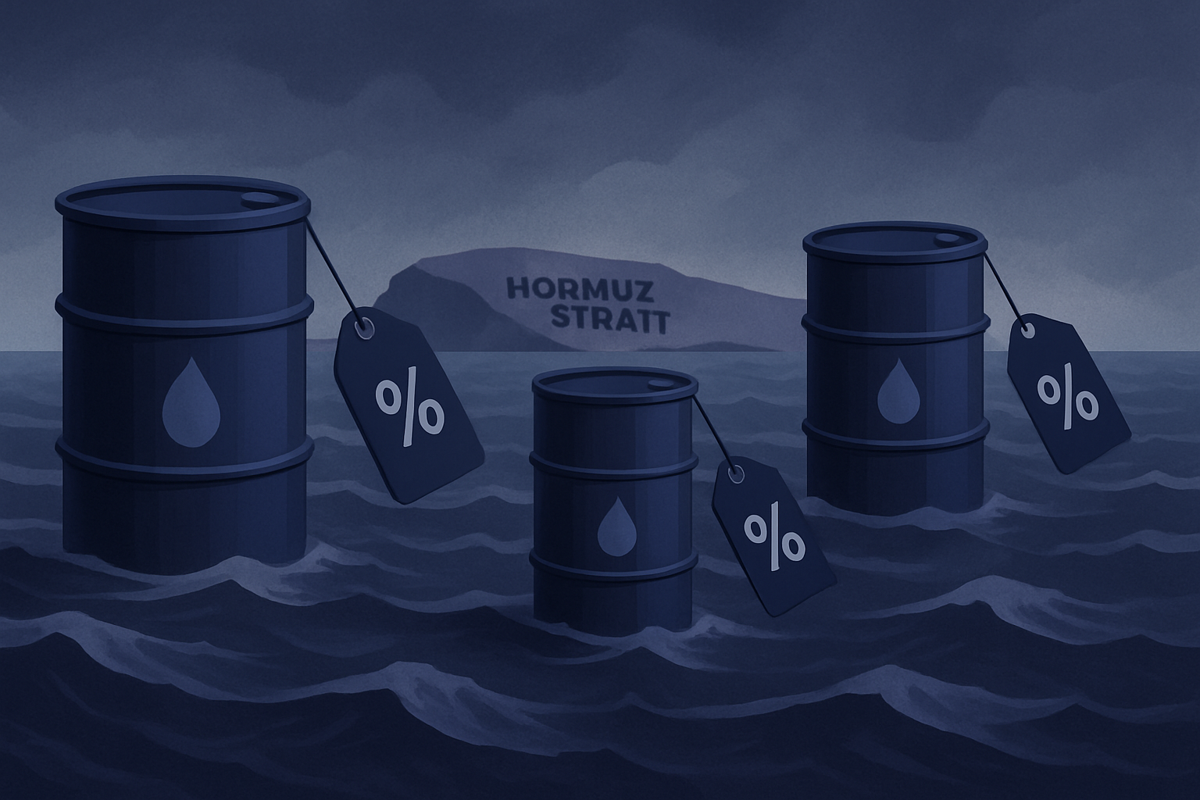
So what’s going on? Why are commodities, which are supposed to be the world’s risk barometer, stuck in neutral while the news cycle is on DEFCON 2? Let’s start with the headlines. Reuters reports that Iranian intermediaries are hawking discounted oil to Indian refiners, thanks to a temporary US sanctions waiver. Meanwhile, traffic through the Strait of Hormuz, the world’s most important oil chokepoint, has slowed after an Iranian attack on a Taiwanese-operated vessel. In a rational world, this is the kind of stuff that ignites a multi-dollar rally in Brent and lights a fire under $DBC. Instead, the market is channeling its inner Buddha.
The facts are as follows. The Strait of Hormuz handles roughly 20% of global oil flows. Any disruption here is supposed to be a five-alarm fire for energy markets. Yet, after the reported attack, vessel tracking data shows a modest dip in transits, but no panic. At the same time, Indian refiners are being offered Iranian barrels at a discount, which should theoretically pressure official prices. But the global benchmark? Unmoved. $DBC is still at $28.55, unchanged for the day, week, and nearly the month. This is not just low volatility. This is a market in a medically induced coma.
Historical context helps. In the past, even a whiff of conflict in the Gulf would send crude up 5% overnight. Think back to 2019, when drone attacks on Saudi facilities sent Brent up nearly 20% in a single session. Today, the market seems to believe in infinite supply, infinite hedging, or maybe just infinite apathy. The last time $DBC was this flat during a geopolitical flare-up, it was 2014 and US shale was flooding the world with oil. But that was a supply glut story. Today, it’s more about demand malaise and the persistent shadow of recession risk.
Cross-asset signals are equally muted. The dollar, which often rallies on risk-off flows, is up but not surging. Gold is treading water. Even volatility indices are barely registering a pulse. It’s as if the entire macro complex is calling the bluff of geopolitics. Maybe traders have seen too many “crisis” headlines that fizzled into nothing. Or maybe the algos have simply decided that unless there are actual barrels on fire, it’s not worth the bandwidth.
But let’s not kid ourselves. The market’s collective shrug is not a sign of strength. It’s a sign of exhaustion. Commodity funds have been bled dry by a year of false starts and whipsaws. Positioning is light. Volumes are anemic. The only thing moving is the newsfeed. This is the kind of environment where a real shock, if it comes, will catch everyone offside.
Strykr Watch
Technically, $DBC is glued to the $28.50 handle, which has become the market’s equivalent of a security blanket. There’s minor support at $28.20, with a more meaningful floor near $27.60, a level that held during the last bout of commodity liquidation. Resistance is up at $29.10, but you’d need a live missile feed to get there at this pace. The RSI is stuck in the mid-40s, confirming that there’s no momentum to speak of. Moving averages are flatlining, with the 50-day and 200-day converging in a classic “nothing to see here” formation. Implied volatility is scraping multi-year lows, which should be a warning sign for anyone who thinks risk has disappeared.
The risk, of course, is that the market is underpricing tail events. If the Strait of Hormuz sees a real escalation, or if Indian refiners start dumping discounted Iranian barrels into the market at scale, the current complacency will evaporate. On the other hand, if demand continues to underwhelm, even a supply shock might not be enough to break the deadlock. This is a market caught between two narratives: geopolitical fear and demand despair. For now, neither is winning.
The opportunity, if you can call it that, lies in the options market. With implied volatility at rock bottom, buying cheap calls or puts is a classic asymmetric bet. If you believe the Strait of Hormuz risk is real, long calls on energy names or $DBC itself could pay off handsomely. Conversely, if you think the market will remain dead money, selling strangles or iron condors might be the only way to generate yield. Just be aware that when volatility wakes up, it tends to do so violently.
Strykr Take
This is not a market for the faint of heart or the easily bored. The stillness in commodities is less a sign of stability and more a setup for a potential volatility explosion. The smart money is not betting on direction, but on the return of movement. When the fuse finally lights, you’ll want to be holding something more than a flatline chart.
datePublished: 2026-06-26 11:31 UTC
Sources (5)
Biggest Market Bubble In U.S. History?
Listen on the go! A daily podcast of Wall Street Breakfast will be available by 8:00 a.m.
Middlemen offer Iranian oil to Indian refiners after US waiver, traders say
Several middlemen have offered Indian refiners discounted Iranian oil as Tehran looks to expedite sales after Washington's temporary sanctions waiver
Trump clean energy tax credit cutoff drives project rush as prices set to soar
U.S. solar developers have secured federal subsidies for a wave of projects large enough to nearly double current capacity, rushing to beat a July 4
7-12% Yields: 2 Of The Best High-Yield Set-Ups I Have Seen
Two of the most defensively positioned, highest-yielding opportunities in years are hiding in plain sight. One combines a 7%+ yield with strong long-t
Tiptree: A Discounted Book-Value Thesis Despite Asset Sales
Tiptree offers a post-restructuring book value discount, trading at 0.74x pro forma book value after major asset sales. TIPT has crystallized value th