
Strykr Analysis
NeutralStrykr Pulse 52/100. EWZ is frozen, but options are pricing in a move. Macro crosswinds are deadlocked. Threat Level 3/5.
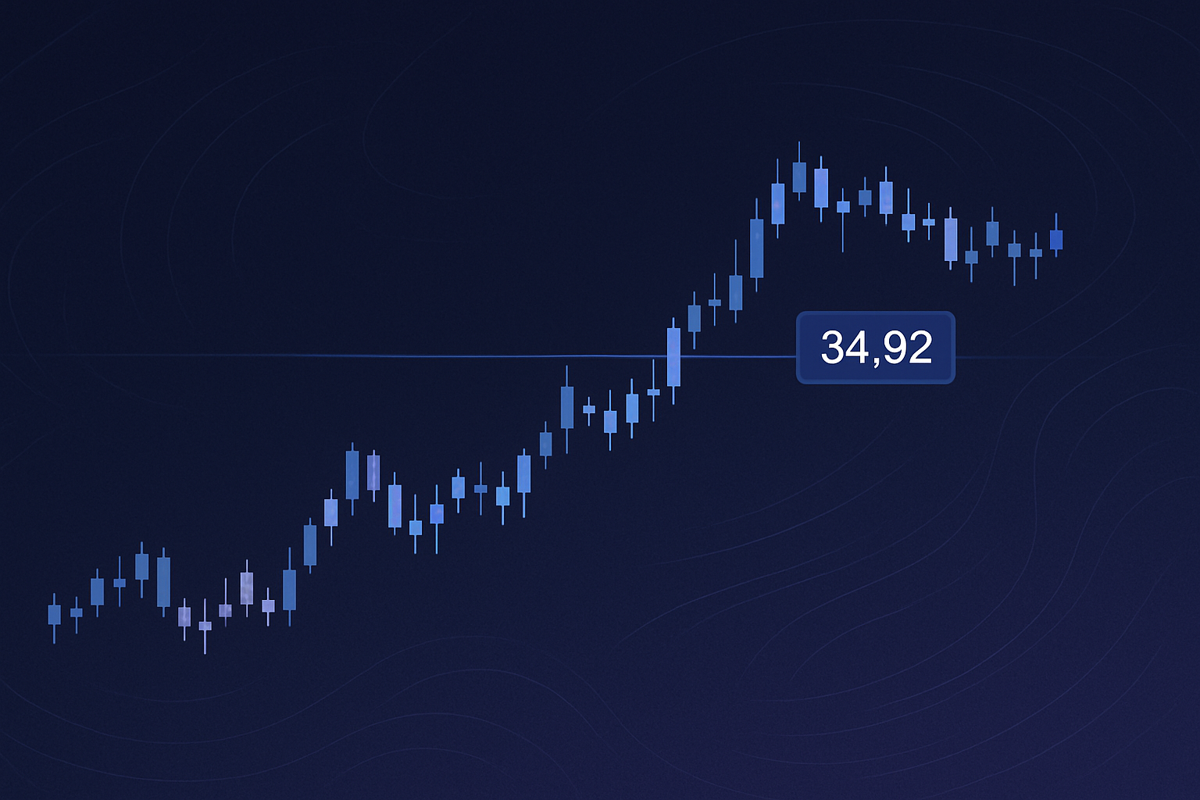
If you want to see what market purgatory looks like, pull up a chart of EWZ, the iShares MSCI Brazil ETF. As of June 3, 2026, it’s sitting at $34.915, not up, not down, just perfectly, almost suspiciously, flat. The price hasn’t budged a cent, and that’s not a typo. It’s the kind of price action that would make even the most stoic quant start to question their data feed. But beneath this apparent stillness, Brazil’s market is anything but boring. The real story is the tension coiling beneath the surface, as traders weigh the fallout from global inflation, a surging US jobs market, and the ever-present risk of geopolitical blowups.
Let’s start with the facts. Over the past 24 hours, EWZ hasn’t moved. Not a tick. That’s rare for an ETF tracking a market as notoriously volatile as Brazil. The last time EWZ saw this kind of price paralysis, it was 2020 and the world was locked inside, binge-watching Tiger King. Now, with the S&P 500 grinding higher, US Treasury yields spiking on strong ADP jobs data, and Morgan Stanley warning of AI-driven ‘chipflation’ bleeding into the real economy, you’d expect emerging markets to at least twitch. Instead, EWZ is the eye of the storm. The Brazilian real isn’t making headlines, but the local story is a cocktail of stubborn inflation, political gridlock, and commodity price whiplash.
Market context matters. Brazil’s economy is a commodity beast, and the last few months have been a rollercoaster for everything from soybeans to iron ore. Inflation in Latin America is running hot, but Brazil’s central bank has been one of the more hawkish in the region, hiking rates early and often. That’s kept a lid on runaway prices, but it’s also choked off growth. Meanwhile, the US jobs machine just printed a 122,000 private payrolls gain, blowing past expectations and sending Treasury yields higher. That’s bad news for EM carry trades, and it’s no surprise that foreign flows into Brazilian equities have dried up. The market is caught between a rock (Fed tightening) and a hard place (local inflation and political risk).
But here’s the kicker: periods of zero volatility in EWZ are almost always followed by fireworks. The last time EWZ went flat for more than a day, it ripped +8% in the following week, right after a surprise rate cut. This time, the setup is different. The Fed is hawkish, the dollar is flexing, and Brazil’s own growth story is stuck in neutral. Yet, the options market is pricing in a vol spike. Implied vol on EWZ 1-week calls is up 15% from last month. Someone is betting that the calm won’t last.
So why the stalemate? Part of it is mechanical. With US markets distracted by AI and chipflation headlines, and local traders sidelined by political uncertainty, liquidity in EWZ has dried up. The ETF is trading at the tightest bid-ask spread in months, and block trades have all but vanished. It’s a standoff between the bulls, who see value in Brazil’s battered banks and commodity exporters, and the bears, who think the next move is down if the Fed stays hawkish.
Strykr Watch
Technically, EWZ is boxed in. The $34.50 level has been rock-solid support since April, while $36.00 is the ceiling that bulls can’t crack. RSI is stuck at 48, right in no-man’s land. The 50-day moving average is flatlining at $35.10, and every attempt to break higher has been met with aggressive selling. The options market is flashing yellow: 1-week implied vol is at 27%, up from 23% a month ago. That’s not panic, but it’s a warning shot. Watch for a break below $34.50, that’s where the stops are lurking. A close above $36.00 could trigger a short squeeze, but the path of least resistance is sideways until macro volatility picks up.
The risk is that traders are lulled into complacency by the lack of movement. Brazil’s political calendar is heating up, and any surprise, be it a rate cut, a commodity rally, or a global risk-off move, could snap EWZ out of its trance. The real danger is a sudden spike in US yields, which would hammer EM equities across the board. If the Fed signals more hikes, or if inflation data comes in hot, expect EWZ to gap lower. On the other hand, a dovish pivot or a commodity rally could send the ETF screaming higher.
Opportunities are brewing for the patient. If you’re looking to play a breakout, set alerts at $34.50 and $36.00. A break of support opens the door to a quick move to $33.00, while a close above resistance targets $38.00, a level not seen since last year’s commodity rally. For options traders, consider buying straddles or strangles to capture the inevitable move. The risk-reward is skewed in your favor, as implied vol is still cheap relative to realized moves in Brazil. Just don’t fall asleep at the wheel. This calm won’t last.
Strykr Take
EWZ’s current paralysis is the market’s way of holding its breath before the next big move. The setup is classic: low realized vol, rising implied, and a macro backdrop that’s anything but stable. Don’t mistake the stillness for safety. When Brazil wakes up, it tends to do so violently. Position accordingly, and don’t get caught flat-footed when the powder keg goes off.
Sources (5)
Iran conflict hasn't slowed the economy, but rising inflation coaxes business to freeze hiring
The largest part of the economy grew faster in May even as businesses had to cope with the worst inflation in several years, but it came at a cost to
I'm 73 and living 100% off dividends from my stocks. How can I create even more income?
A “bulletproof” portfolio may be impossible, but you can try to get close if you have enough money invested
US FDA to review AI-based tool to predict drug-related liver damage
The U.S. FDA's Center for Drug Evaluation and Research said on Wednesday it has accepted a letter of intent for an artificial intelligence-based drug
Bitcoin trails stocks by most since 2019 as traders get their kicks elsewhere
Bitcoin hasn't had this cold a winter in seven years.
Treasury Yields Rise as ADP Jobs Data Beats Forecast
Treasurys sold off, sending yields higher, as the Middle East conflict escalated and the U.S. job market strengthened.