
Strykr Analysis
NeutralStrykr Pulse 52/100. Gold is stuck in a holding pattern, with no directional conviction. Threat Level 2/5. Risk is low until a catalyst emerges.
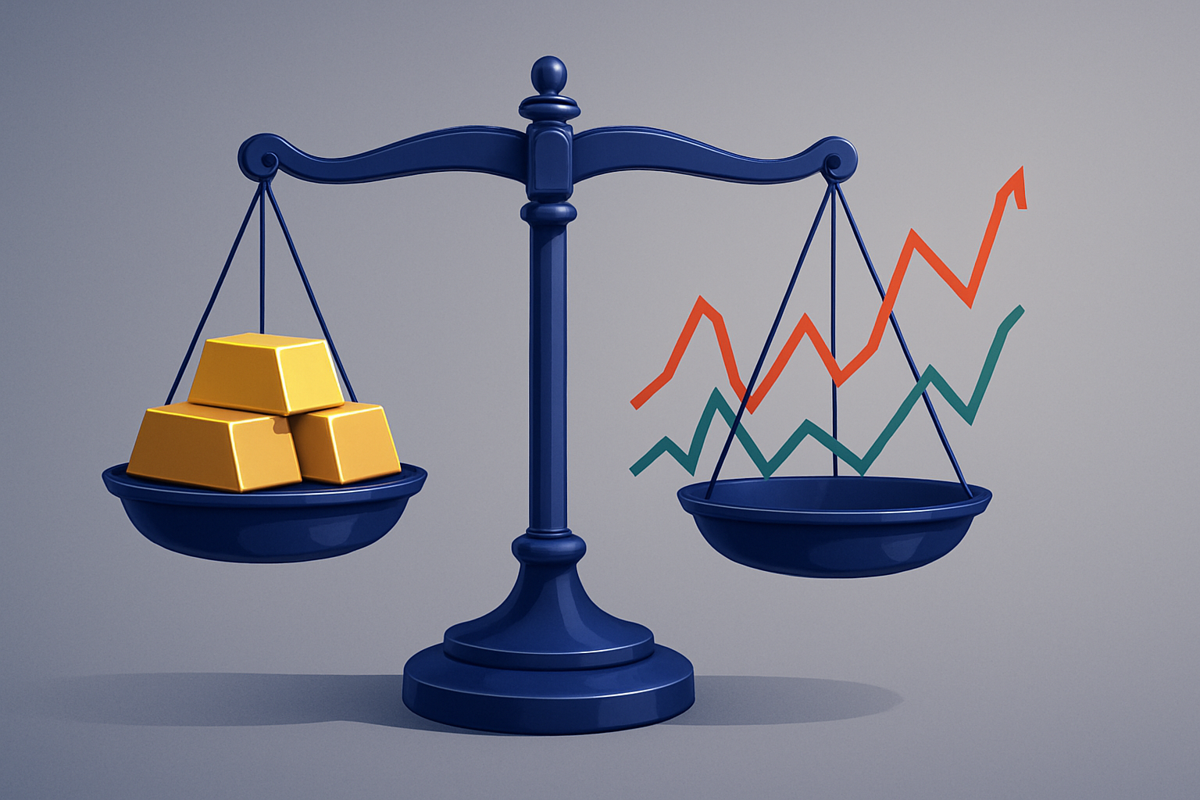
Gold has become the market’s most expensive screensaver. At $396.26, the yellow metal hasn’t budged, not even a twitch, in a market where everything else is either melting up or melting down. For traders used to volatility, this is the financial equivalent of watching paint dry, except the paint is made of 24-karat boredom. The real story isn’t that gold is flat, it’s that it’s flat in the face of everything the macro gods could throw at it: Fed hawkishness, Middle East tension, and a global AI equity bubble that’s either about to burst or become sentient and trade itself.
So why should anyone care about gold right now? Because when an asset that’s supposed to be the world’s panic button refuses to react, it’s telling you something about the market’s collective psychology. Either everyone is so hedged they’re numb, or gold’s traditional narrative as a safe haven has finally been mugged by ETFs, crypto, and the algorithmic dopamine rush of tech stocks.
Let’s get forensic. Gold’s price has been locked at $396.26 for hours, with not even a whisper of movement. This isn’t just a lack of volatility, it’s a total absence of conviction. The last time gold traded this flat for this long, the world was still arguing about whether inflation was transitory. Now, with the Fed’s new chair Kevin Warsh channeling his inner Volcker and jobs data whipsawing bond yields, you’d expect at least a knee-jerk move in gold. Instead, nothing. Not even a flicker.
According to Reuters, U.S. Energy Secretary Chris Wright just said that lower gas prices will require a resolution with Iran. Oil traders yawned, and so did gold. Meanwhile, the S&P 500 is threatening to break a nine-week winning streak, and tech stocks have finally remembered they can go down. Gold? Still flat. Even as the AI trade stumbles and bond volatility surges, gold’s refusal to move is the loudest silence in the market.
Historically, gold thrives on uncertainty. In 2008, it spiked as the world burned. In 2020, it ripped higher as central banks printed money like it was going out of style. But in 2026, with inflation sticky and geopolitical risk everywhere, gold is the dog that didn’t bark. The last major rally saw gold breach $400 before fading, and since then, it’s been a masterclass in mean reversion.
Cross-asset flows tell the same story. ETF inflows into gold have dried up, with investors preferring the instant gratification of AI stocks or the wild west of crypto. Even as Bitcoin ETFs shed $1.7B in a week, gold hasn’t seen a sympathy bid. If anything, the lack of movement suggests that gold’s role as a portfolio hedge has been replaced by volatility itself. Traders are hedging by trading VIX futures, not bullion.
The technicals are equally uninspiring. Gold has been rangebound between $390 and $400 for weeks, with every breakout attempt immediately sold. RSI is stuck in the middle, MACD is flatlining, and moving averages are converging into a single, meaningless line. The market has collectively decided that gold is neither a buy nor a sell, it’s a placeholder.
Strykr Watch
If you’re a technical trader, gold’s current setup is the ultimate test of patience. Support sits at $392, with resistance at $400. The 50-day and 200-day moving averages are converging at $395, creating a technical no-man’s land. RSI is hovering around 48, offering no edge. Volatility has collapsed, with realized volatility at multi-year lows. For options traders, implied vols are so cheap that buying straddles is almost tempting, if only there was a catalyst on the horizon.
But that’s the rub: there isn’t. With no high-impact economic events on the calendar and macro risk already priced in, gold is stuck in purgatory. The only real trade is to fade any breakout attempt until proven otherwise. If $400 breaks with volume, you chase. If $392 fails, you short. Until then, you wait.
The risks are obvious. If the Fed surprises with another hawkish pivot, real yields could spike and gold could break lower. On the flip side, any geopolitical shock could spark a flight to safety and send gold screaming higher. But until one of those scenarios materializes, gold is content to do nothing.
For now, the opportunity is in the options market. Implied volatility is so cheap that buying gamma makes sense, especially if you believe that the current calm is the precursor to a storm. Alternatively, selling premium is a widowmaker’s game, one headline and you’re toast. The smarter play is to wait for a range break and then pile in with momentum.
Strykr Take
Gold’s refusal to move is the market’s way of telling you to look elsewhere. Until something breaks, gold is a spectator sport. But when it does move, it will move fast. Stay nimble, keep your powder dry, and don’t get lulled into complacency by the current lull. The next big trade is coming, but it isn’t here yet.
Sources (5)
Korean Equities: A Diverging, Concentrated Market
Korea is the hardware backbone of the AI-driven supercycle, continuing to drive earnings, exports and equity market outperformance. The 'old' heavy ma
The End Of Overbought?
Equities are turning lower to end the week, putting the S&P 500 on pace to end a nine-week winning streak. The tech sector that has fueled much of the
Kevin Warsh faces early Fed pressure as strong jobs data fuel a hawkish shift, rate hike bets and policy clash
Friday's labor-market rebound sets in motion a collision between the new Fed chair, the bond market and the White House.
Review & Preview: Tech Wreck
All three indexes fell after the AI rally came to a halt.
Cash Isn't Always King: JPMorgan's Santos
Gabriela Santos, chief market strategist for the Americas at JPMorgan Asset Management, joins Scarlet Fu and Tom Keene on "Bloomberg Money."