
Strykr Analysis
BearishStrykr Pulse 58/100. The market is sleepwalking through a regime change in Japanese yields. Threat Level 4/5.
If you blinked, you missed it: Japanese government bond yields just hit their highest levels in four decades, but the ETF world, specifically IGOV, barely flinched. At $42, IGOV is as flat as the Sea of Japan on a windless day. But beneath the surface, the tectonic plates of global fixed income are grinding. For traders who’ve spent the last decade lulled by negative yields and BoJ omnipotence, this is not just a footnote. It’s the most important bond market story you’re not trading.
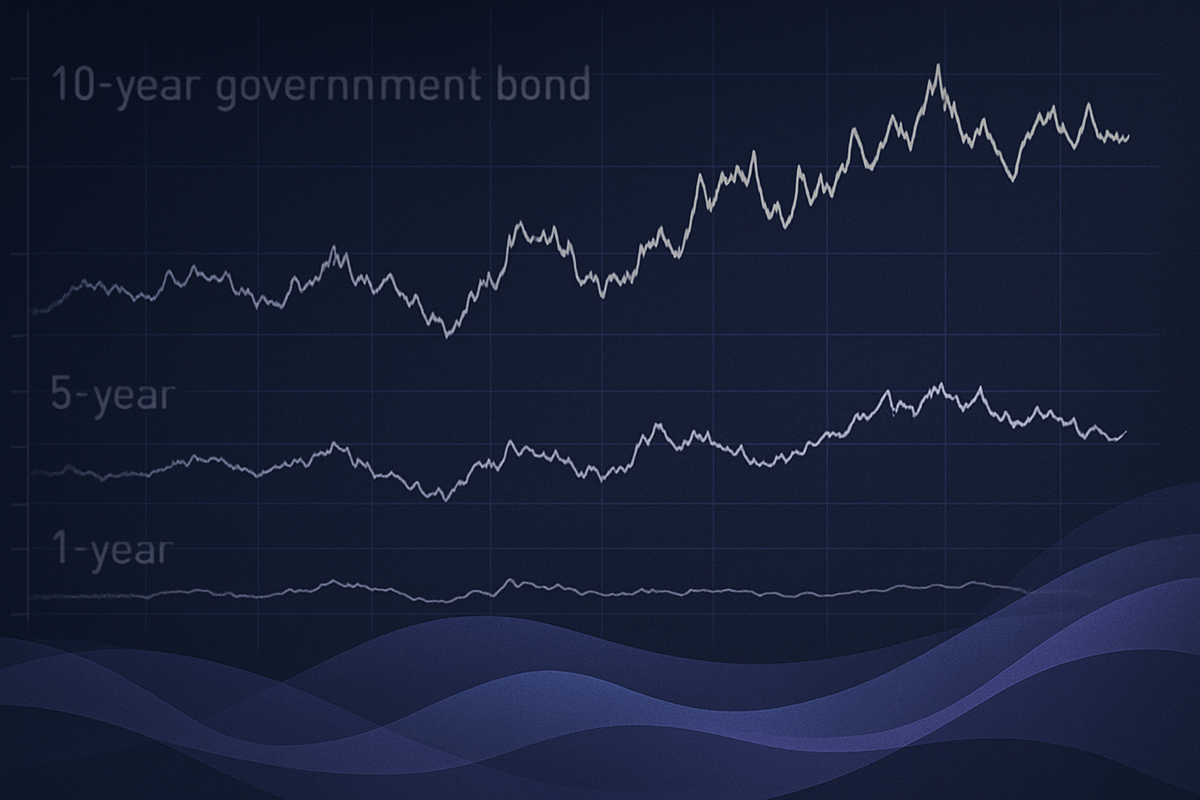
Let’s start with the headline: Japan’s government is scrambling to patch up its budget with a 3 trillion yen (about $19 billion) supplementary package, according to CNBC (2026-05-31). Prime Minister Takaichi is waving the red flag, warning that fiscal stress is no longer theoretical. The bond market, never known for its sense of humor, is responding with the highest 10-year JGB yields since the 1980s. Yet the iShares International Treasury Bond ETF (IGOV) sits motionless, as if nothing happened.
This is the kind of disconnect that should make every macro trader’s Spidey-sense tingle. IGOV is a basket of non-US sovereign debt, heavily weighted toward Japanese and European bonds. In theory, a generational move in JGB yields should ripple through the ETF. Instead, we get a flatline. Is this a case of the market being smarter than the headlines, or is it just asleep at the wheel?
The facts are stark. Japan’s debt-to-GDP is north of 260%, making Italy look like a model of fiscal discipline. The BoJ’s yield curve control is now a memory. Yields are moving, and with them, the risk premium for every asset that benchmarks off global rates. The last time JGBs moved like this, the Berlin Wall was still standing. For US and European traders, the temptation is to shrug and focus on the Fed. But that’s a mistake. Japanese capital is the lubricant that keeps global carry trades humming. When that flow reverses, nothing is safe, not Treasurys, not Bunds, not even the $SPY.
The global context is a powder keg. US debt is ballooning, but the market still pretends it can fund itself at sub-3% forever. Europe is barely growing, but Bund yields are ticking up. The BoJ’s slow-motion exit from ultra-loose policy is the butterfly flapping its wings. If Japanese investors start repatriating, the knock-on effects could be seismic. Remember the 2015 Bund tantrum? That was child’s play compared to what a real JGB unwind could trigger.
For now, IGOV is the eye of the storm. Its lack of movement is either a masterclass in forward-looking pricing or a sign that passive flows have numbed the ETF to real risk. The ETF’s composition is about 20% Japanese debt, so the direct impact should be visible. That it isn’t tells you something about how much faith the market still has in the BoJ’s ability to manage the narrative. But faith is not a strategy.
The technicals are almost boring: IGOV is stuck at $42, with no sign of life. But look at the volatility metrics, historically, periods of prolonged calm in sovereign bond ETFs have preceded some of the nastiest spikes in cross-asset volatility. The RSI is neutral, but the risk is asymmetric. If JGB yields keep climbing, the ETF’s duration exposure is a ticking time bomb. The 50-day and 200-day moving averages are converging, a classic setup for a volatility squeeze. The last time we saw a similar pattern, IGOV dropped -8% in a matter of weeks.
Strykr Watch
For the technically minded, $42 is a hard ceiling. A break below $41.50 opens the door to a quick move to $40.80. On the upside, $43 is the next resistance, but it looks like a mirage unless yields suddenly reverse. The ETF’s implied volatility is at multi-year lows, which is exactly when you want to be long gamma. Watch for a spike in volume, if the BoJ blinks or the yen starts to unravel, IGOV could gap down before you can hit the sell button.
The risks are not theoretical. If the BoJ is forced to hike faster than expected, or if the fiscal math gets uglier, JGBs could sell off hard. That would drag IGOV lower, and the spillover could hit every asset class that relies on Japanese capital. The real bear case is a global rates shock, with IGOV as the canary in the coal mine. If US yields spike in sympathy, expect a correlated selloff in risk assets everywhere.
But there are opportunities for the nimble. If IGOV dips to $41.50, the risk-reward on a tactical long is attractive, with a tight stop at $41. For the brave, a short on a break below $41.50 targets $40.80. The real home run is in volatility: long-dated calls or straddles are cheap, and a volatility spike could pay off big. For cross-asset traders, watch the yen, if it starts to strengthen, that’s your signal to fade IGOV rallies.
Strykr Take
This is not the time to be complacent. IGOV’s calm is the market’s way of telling you it hasn’t woken up yet. But when it does, the move will be violent. The Japanese bond market is the world’s pressure valve, and it’s starting to hiss. If you’re not watching IGOV, you’re missing the most important warning signal in global macro. Don’t sleep on this trade.
Strykr Pulse 58/100. The market is underpricing tail risk. Threat Level 4/5.
Sources (5)
Japanese bond yields are the highest in 40 years. The budget and a 'red flag' from PM Takaichi have markets nervous
Japan's government is preparing a supplementary budget of around 3 trillion yen, or about $19 billion, to replenish reserves and fund fuel and utility
Korea And Japan Worry Me More Than The Strait Of Hormuz
The Strait of Hormuz and its impact on the commodities prices are concerning. But in the end, I expect mostly near-term impacts.
Apollo's chief economist says he sees 'zero evidence' of AI-related job losses, even as CEOs cite the tech in layoffs
Apollo's chief economist said there's "zero evidence of AI-related job losses." A parade of tech leaders celebrated that take over the weekend.
The Internet Bubble's Most Important Lesson For AI Investors
A deeper dive into the Internet experience and what it may add to the recent 60 Minutes discussion of AI, market risk, and the lessons of history.
The Tech Tug-Of-War: U.S.-China Relations And The Race For Innovation
The Tech Tug-Of-War: U.S.-China Relations And The Race For Innovation