
Strykr Analysis
BearishStrykr Pulse 38/100. Breadth is collapsing, AI leadership is faltering, and the market is complacent. Threat Level 4/5.
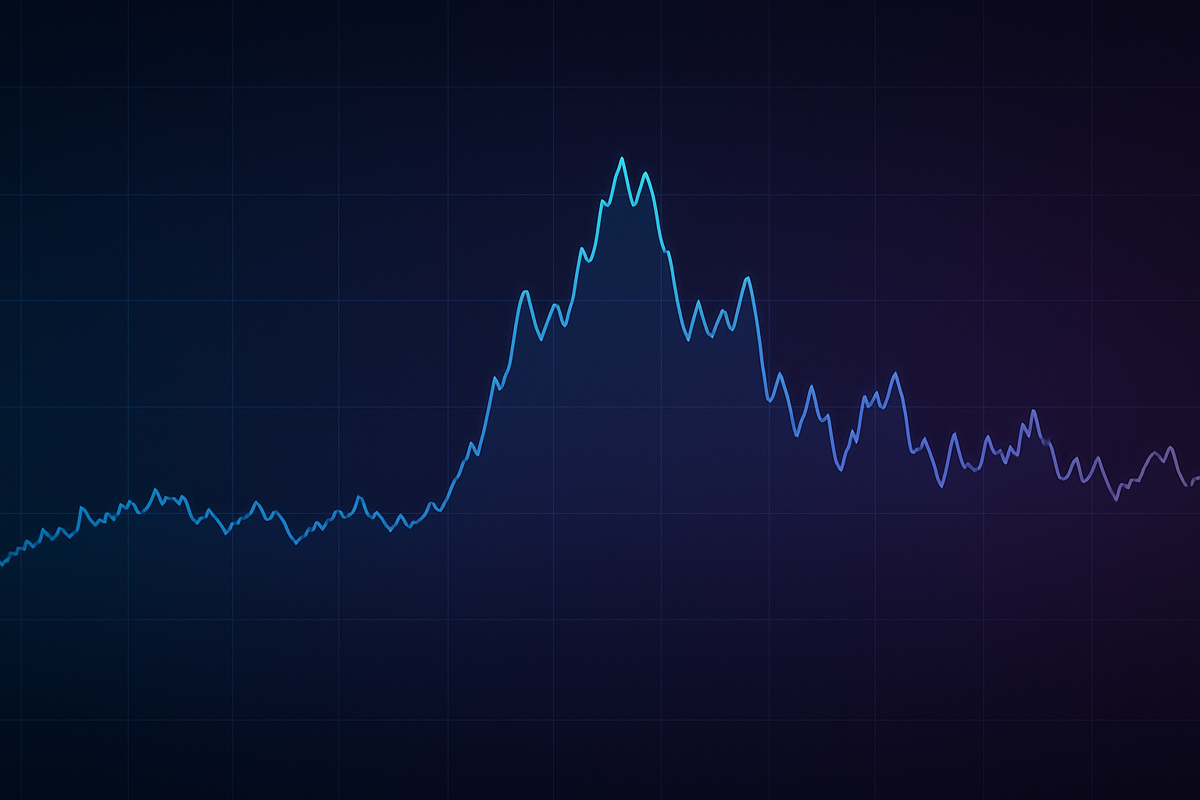
It’s not every week that the Nasdaq grinds to a halt after a nine-week vertical sprint, but that’s exactly what happened as of June 7, 2026. The index, sitting at a frothy 25,789.39, has been the poster child for the AI mania, with traders chasing every whisper of a new language model or chip launch. But the music stopped abruptly this week, with a sharp selloff that erased a month’s worth of gains in a single session. Blame it on a strong US jobs report if you want, but the real story is that risk appetite finally blinked after months of relentless buying.
The facts are brutal. The S&P 500’s nine-week rally ended not with a whimper but with a full-blown risk-off tantrum, according to Seeking Alpha’s late Friday wrap. Nasdaq futures, which had been pricing in another leg higher, flatlined into the weekend, leaving traders staring at screens and wondering if the AI trade is out of gas or just catching its breath. The VIX at 20.18 says the market is nervous but not in outright panic. The dollar index (DX-Y.NYB) at $100.07 is steady, a sign that global flows aren’t scrambling for cover, yet. But the real tell is in the price action: the Nasdaq’s parabolic ascent has hit a wall, and no one wants to be the last one holding the bag if the unwind gets ugly.
This isn’t just about one hot jobs print. It’s about a market that’s been running on fumes, with breadth narrowing to a handful of AI winners while the rest of the index looks like it’s stuck in quicksand. The last time the Nasdaq saw a nine-week rally of this magnitude, it was 2021 and everyone was still working from home, buying Pelotons, and YOLOing into meme stocks. Now, the AI trade is the only game in town, and the crowd is getting restless. Barron’s notes that solar and AI stocks took the brunt of Friday’s selloff, with capital spending darlings suddenly looking vulnerable as rates refuse to roll over. It’s a reminder that even the most beloved narratives can’t outrun gravity forever.
The macro backdrop is hardly reassuring. With the Fed still talking tough and inflation refusing to die, the market’s dream of a Goldilocks soft landing is looking more like a fairy tale. There are no high-impact economic events on the immediate horizon, but that just means traders are left to stew in their own uncertainty. The S&P 500’s breadth is a mirage, as recently covered, and the Nasdaq’s leadership is looking increasingly brittle. Cross-asset flows aren’t offering much comfort either. The dollar is flat, commodities are dead money, and even the crypto crowd is licking its wounds after a brutal June. If you’re looking for a safe haven, good luck, there’s nowhere to hide when the AI trade goes cold.
So what’s really happening under the hood? The Nasdaq’s rally has been powered by a handful of megacaps, think Nvidia, Microsoft, and the usual suspects, while the rest of the index has lagged. That’s a classic late-cycle dynamic, and it rarely ends well. When everyone is crowded into the same trades, the exits get awfully narrow when sentiment shifts. The jobs report was just the catalyst; the real issue is that valuations are stretched, earnings growth is slowing, and the Fed isn’t coming to the rescue. The VIX at 20 says traders are nervous, but not terrified. That’s the danger zone, complacency breeds fragility, and fragility begets volatility.
Strykr Watch
Technically, the Nasdaq is sitting right at a key inflection point. The 25,789 level is both a psychological and technical battleground, with support at 25,500 and resistance at the recent highs near 26,200. The RSI is rolling over from overbought territory, and momentum indicators are flashing warning signs. If the index breaks below 25,500, look out below, there’s not much support until 25,000. On the upside, a clean break above 26,200 could squeeze shorts and trigger another melt-up, but the odds are fading as breadth deteriorates. Watch for sector rotation, if AI names keep bleeding and defensives can’t catch a bid, the unwind could accelerate fast.
The risk is that the market is underestimating just how crowded the AI trade has become. If rates stay sticky and earnings disappoint, there’s a real chance of a deeper correction. The Fed’s next move is the wild card, any hint of hawkishness could send algos into a tailspin. On the flip side, if the rally resumes, it will be on even shakier ground, with fewer and fewer names carrying the load. This is a market that’s running on hope, not fundamentals.
Opportunities are scarce, but not nonexistent. If you’re nimble, look for tactical shorts on failed bounces, with tight stops above resistance. Longs can try to buy dips near 25,500, but keep risk tight, this is not the time to be a hero. Option traders should watch for volatility spikes, straddles and strangles could pay off if the market finally breaks out of its range. The real play is to wait for confirmation, don’t chase, let the market come to you.
Strykr Take
The Nasdaq’s rally isn’t dead, but it’s definitely on life support. The AI trade has carried this market for months, but the crowd is getting nervous and the exits are getting crowded. This is a time for discipline, not heroics. Stay nimble, manage risk, and don’t fall in love with the narrative. The next move will be violent, make sure you’re on the right side of it.
Sources (5)
The 1-Minute Market Report, June 7, 2026
The S&P 500's nine-week rally abruptly ended with a sharp selloff, erasing a month's gains after a strong employment report. Risk-off sentiment domina
When Trump Jawbones the Market, Bet Against Him at Your Peril
From oil to interest rates, the president has repeatedly moved markets in his direction. Whether that serves the economy is another question.
IATA Director on Air Transport Stagflation & Challenges
The International Air Transport Association (IATA) Director Willie Walsh speaks on the stagflation & challenges for the industry air transport industr
IATA Director Willie Walsh on Rising Cost of Jet Fuel
The International Air Transport Association (IATA) Director Willie Walsh speaks on how the cost of jet fuel will provide an incentive for refineries t
US budget carrier Breeze Airways sets sights on 2027 IPO
U.S. low-cost domestic carrier Breeze Airways is targeting an initial public offering in 2027, CEO David Neeleman said on Saturday, noting the plan