
Strykr Analysis
BullishStrykr Pulse 72/100. The market is underpricing geopolitical risk. Volatility is cheap, and positioning is complacent. Threat Level 4/5.
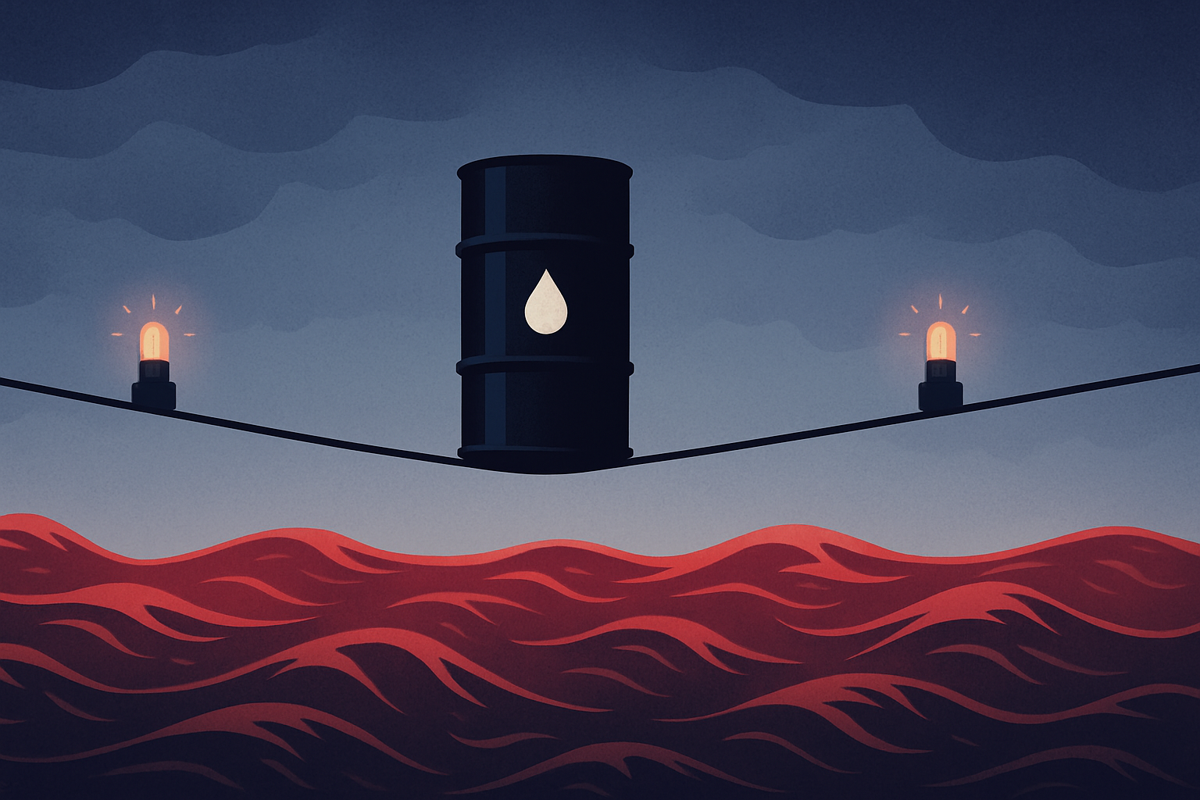
The Strait of Hormuz is closed, again. If you’re a commodities trader, you know what that means, volatility, whiplash, and a market that’s one headline away from a full-blown panic. The so-called U.S.-Iran ceasefire was never more than a diplomatic mirage, and the latest breakdown has left energy markets exposed and twitchy. It’s not just about oil tankers idling in the Gulf. This standoff is a reminder that the world’s most important energy chokepoint is also its most reliable source of geopolitical risk premium.
As of June 2, 2026, oil-linked ETFs like DBC are frozen at $29.99, barely twitching despite headline risk that would have sent prices haywire in previous cycles. The calm is as artificial as a central bank balance sheet. The market’s collective shrug isn’t a sign of confidence. It’s paralysis. The last 24 hours saw Seeking Alpha declare, “The Illusion Of Ceasefire Is Over,” while the Wall Street Journal tracked South Korea’s inflation spike back to Middle East tensions and higher oil prices. The Strait of Hormuz remains blocked, and yet, oil is flat. This is not normal price action. It’s a powder keg with a lit fuse, and the market is pretending it’s a scented candle.
The facts are simple. Iran’s non-negotiable demands have scuttled any hope of a real deal. Shipping insurance rates are spiking, but spot prices are stuck. The options market is pricing in a volatility event, but the underlying is comatose. The last time the Strait was closed for more than a week, Brent crude jumped +18% in five sessions. Now? Nothing. The market is daring you to fall asleep at the wheel.
Let’s zoom out. Commodities have spent most of 2026 oscillating between existential dread and algorithmic indifference. The last major oil shock was in 2022, when Russia’s invasion of Ukraine sent Brent to $135. But the world has changed. Inventories are leaner, OPEC+ is fractured, and the U.S. shale patch is no longer the swing producer it once was. Meanwhile, demand from Asia is relentless. South Korea’s latest CPI print, +3.1% YoY, a 26-month high, was directly attributed to higher oil prices. Yet, the price of oil itself refuses to budge. This disconnect is not sustainable. Either the physical market is about to snap, or the paper market is about to wake up with a hangover.
The options market is already twitchy. Implied volatility on major oil ETFs is creeping higher, even as spot prices flatline. The spread between front-month and second-month futures is starting to widen, a classic sign that traders expect something to break. Shipping rates through alternative routes are up +22% week-on-week. Insurance premiums for Gulf tankers have doubled since the ceasefire collapsed. Someone, somewhere, is paying for risk. Just not in the spot price, yet.
What’s the market missing? For one, the sheer scale of the Strait of Hormuz’s importance. Roughly 21 million barrels of oil per day, about a fifth of global consumption, flows through that narrow corridor. Block it for a week, and inventories start to drain. Block it for a month, and you have a global supply crisis. The current standoff is already the longest since 2019. The last time this happened, oil took a week to react, then spiked +15% in two days. The algos are asleep, but the fundamentals are wide awake.
Strykr Watch
Technically, DBC at $29.99 is stuck in a holding pattern. The 50-day moving average sits at $30.10, with resistance at $30.50, a level that’s been tested three times this quarter. Support is thin at $29.50, and a break below opens the door to a quick retest of $28.80. RSI is neutral at 49, but implied volatility (IV) is creeping up, now at a three-month high of 23%. The options skew is leaning bullish, with call open interest outpacing puts by 1.6:1. Watch for a volatility pop if headlines worsen. If the Strait reopens, expect a swift mean reversion. If tensions escalate, the upside could be violent.
The risk here is that the market is underpricing tail risk. A single missile, a rogue drone, or a diplomatic misstep could send oil +10% in a session. Conversely, a sudden de-escalation could see prices collapse as risk premium evaporates. The market is pricing in stasis, but the fundamentals scream anything but.
Opportunities abound for traders willing to fade the consensus. Long volatility via oil ETF options is cheap relative to realized risk. A breakout above $30.50 targets $32 in short order, while a breakdown below $29.50 could see a flush to $28.80. The risk-reward skews positive for those betting on a volatility event.
Strykr Take
This is not a market to sleep on. The Strait of Hormuz standoff is the kind of tail risk that only looks obvious in hindsight. The fact that oil is flat is not a sign of safety. It’s a warning. When the market finally wakes up, it won’t be gradual. It’ll be a stampede. Position accordingly.
Sources (5)
Prominent Short Seller Andrew Left Convicted of Fraud
A federal jury in Los Angeles found that Left defrauded other investors with insincere opinions designed to move stock prices in his favor.
South Korea Inflation Accelerated to 26-Month High in May
The benchmark consumer-price index rose 3.1% from a year earlier in May, reflecting the effects of higher oil prices amid Middle East tensions and the
ETF Edge on if ETFs are growing faster than the stocks they cover
Much has been made of the fact that there are now roughly one-thousand more ETFs than stocks in the marketplace. Is that a concern?
Tech investor Dan Nile: 'You can be in an irrational market and still have a long way to go'
Dan Niles, Niles Investment Management, joins 'Closing Bell Overtime' to talk parabolic moves in the tech trade and what these massive gains signal.
Jim Cramer says Jensen Huang's Computex keynote revealed more winners in the AI boom
Jim Cramer said Nvidia CEO Jensen Huang's Computex keynote showed the AI infrastructure boom is creating winners well beyond Nvidia. He pointed to com