
Strykr Analysis
NeutralStrykr Pulse 52/100. Market is pricing in complacency, but tail risks remain. Threat Level 2/5.
If you blinked, you missed it. Another tanker hit in the Strait of Hormuz, the world’s most important oil chokepoint, and the market’s reaction was, well, let’s call it underwhelmed. In a world where a single tweet from a central banker can send crude up $3, you’d think a missile strike in the Middle East would at least get the algos twitching. Not this time. Commodities traders, seasoned by years of “cry wolf” headlines and a global oil market flush with spare barrels, barely lifted an eyebrow.
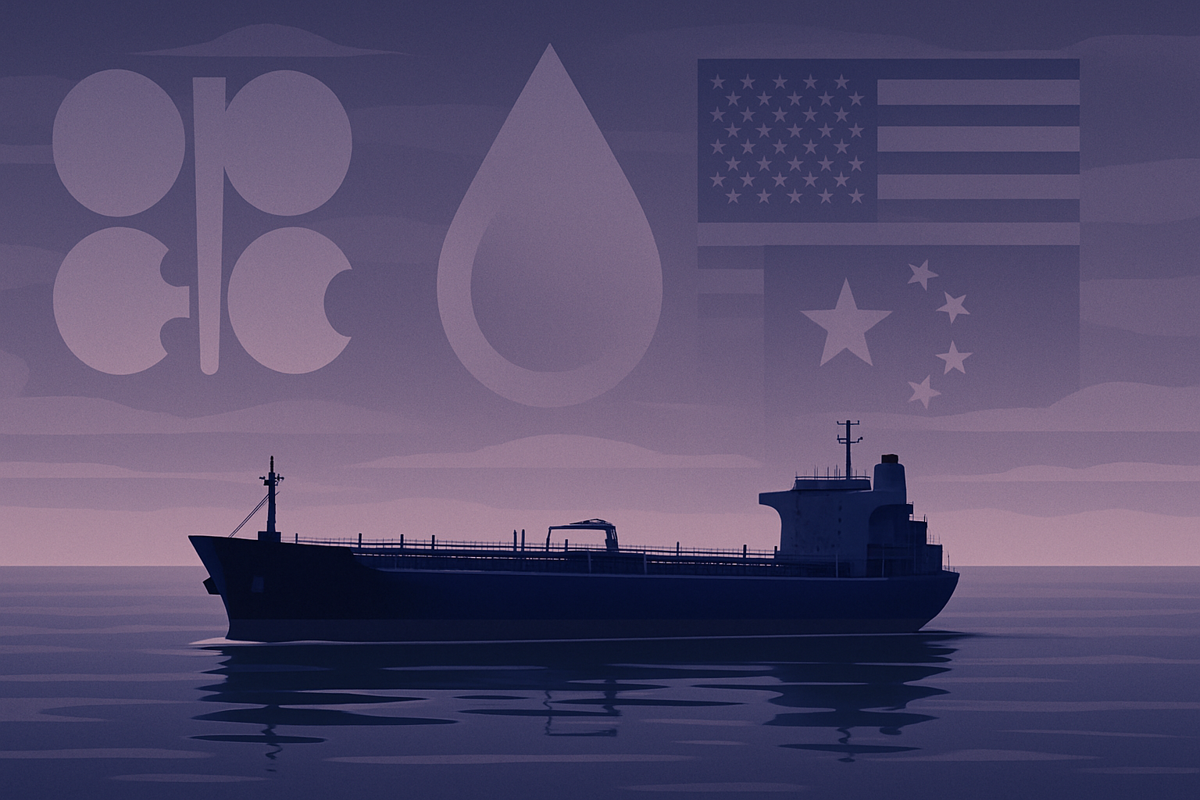
The facts: On June 27, a tanker was struck by a projectile in the Strait of Hormuz, ratcheting up already simmering tensions between the US and Iran. CNBC reported the incident at 12:20 UTC, but by the time London desks logged in, the price of the broad commodities ETF $DBC was, wait for it, unchanged at $28.55. No spike, no panic, just a flatline. That’s not a typo. Four consecutive prints, zero movement.
This isn’t the first time the oil market has shrugged off geopolitical fireworks. In fact, it’s become routine. The last time a similar event sent crude meaningfully higher was 2022, when spare capacity was razor-thin and China was still in COVID lockdown. Fast forward to 2026, and the supply picture is very different. US shale is back online, OPEC’s discipline is fraying, and global inventories are healthy. Even the most excitable macro tourists have learned not to chase the first headline.
There’s also the inflation angle. With US CPI cooling and the Fed’s new chair Kevin Warsh still talking tough, traders are more worried about rate hikes than rockets. Abby Joseph Cohen warned on Bloomberg that “lofty stock prices may be hiding risks,” but the real risk for commodities is that nobody cares about risk anymore. The market is pricing in a world where supply shocks are temporary and demand shocks are permanent.
The technicals tell the same story. $DBC has been stuck in a range for months, with every attempt at a breakout quickly smothered by sellers. The ETF tracks a basket of energy, metals, and ags, but oil is the main event. With spot crude oscillating between $70 and $80, and no sign of a sustained trend, the path of least resistance is sideways.
But here’s the thing: Complacency is itself a risk. The more traders ignore geopolitical threats, the more vulnerable the market becomes to a true black swan. If the Strait of Hormuz were to close, even temporarily, it would take 20% of global oil supply offline. That’s not a tail risk, that’s an extinction-level event for shorts. Yet the vol markets are pricing in a snooze.
Strykr Watch
Technically, $DBC is boxed in. The ETF has hard support at $28.00, with resistance at $29.50. The 50-day moving average is flatlining at $28.60, and RSI is a lethargic 48. No momentum, no conviction. Options skew is neutral, with implied volatility scraping along multi-year lows. If you’re looking for fireworks, you’ll have to bring your own.
The risk, of course, is that something finally breaks. A real supply disruption, a miscalculation by the US Navy, or a sudden spike in Middle East tensions could send crude, and $DBC, exploding higher. But until then, the market is content to nap.
For traders, the opportunity is in the extremes. Fade the noise, but don’t fall asleep at the switch. If $DBC breaks above $29.50 on real volume, that’s your signal. Until then, range trade it and keep your stops tight.
The bear case is obvious: Demand remains soft, inventories are flush, and every rally gets sold. But the bull case is lurking in the background, waiting for the market to get caught offside.
Strykr Take
The oil market’s collective yawn in the face of geopolitical risk is both rational and reckless. Rational, because the fundamentals don’t support a sustained rally. Reckless, because the next headline could be the one that actually matters. For now, $DBC is a widowmaker for trend followers and a playground for mean reversion junkies. Keep your powder dry, but don’t be the last one out if the music stops.
Sources (5)
A Month For 'The Rest'
We've made numerous mentions of the weakness in mega-cap stocks so far this month, and given their weightings in the S&P 500, the impact on the index
Chip Makers Are Profiting Off AI at the Expense of Just About Everyone Else
We are witnessing an extraordinary transfer of cash from the providers of AI—and, perhaps one day, AI users—to memory-chip makers.
Here is how Alan Greenspan ran the Fed—and how Kevin Warsh's approach compares
The approach of the new Federal Reserve head might not always align with the standard his predecessor set.
Tanker struck in Strait of Hormuz as U.S.-Iran tensions escalate
A tanker in the Strait of Hormuz was reported struck by a projectile on Saturday, the latest escalation of tensions between the U.S. and Iran. The U.
Stock Valuations Should Worry Investors: Abby Joseph Cohen
Abby Joseph Cohen, professor at Columbia Business School, joins Lisa Mateo and Tom Keene on "Bloomberg Money." Lofty stock prices may be hiding risks