
Strykr Analysis
NeutralStrykr Pulse 42/100. Market is pricing in no risk, but the threat of a volatility spike is real. Threat Level 3/5.
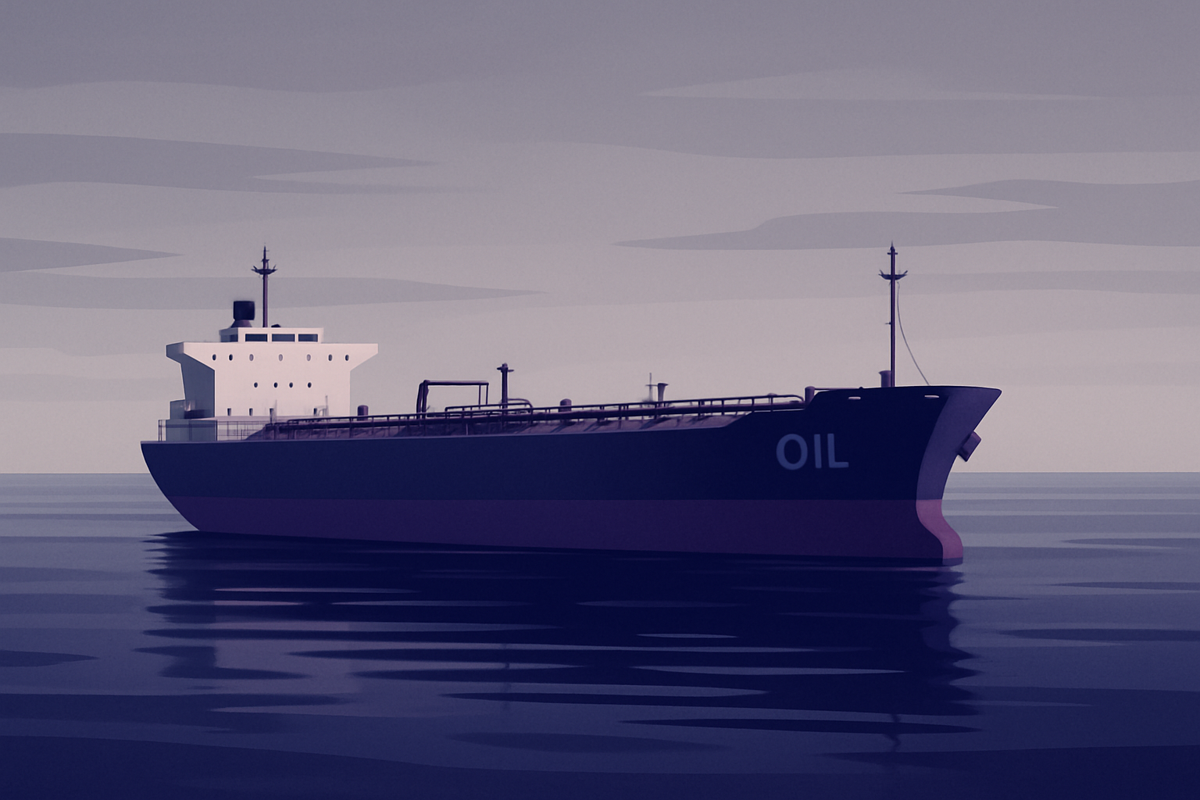
A tanker in the Strait of Hormuz takes a hit, U.S.-Iran tensions flare, and what do commodity markets do? Absolutely nothing. $DBC sits at $28.55, flat as a pancake. If you’re wondering why the world’s most strategically sensitive shipping lane can erupt and oil traders barely blink, you’re not alone. The real story isn’t the missile, it’s the market’s remarkable indifference. This is the new abnormal in commodities, where geopolitical risk is either priced out or simply ignored until it’s too late.
Let’s get the facts straight. According to CNBC, a tanker was struck by a projectile in the Strait of Hormuz on Saturday, June 27, 2026, marking the latest escalation in a long-running series of U.S.-Iranian confrontations. The Strait handles nearly 21 million barrels of oil per day, about a fifth of global consumption. In the old world, this would have sent oil futures screaming higher. Today? $DBC (the broad commodities ETF) is unmoved, closing the week at $28.55, unchanged.
This isn’t just a one-off. The last twelve months have seen a parade of headline risk, Red Sea drone attacks, OPEC+ production squabbles, even a brief Suez Canal blockage. Each time, the knee-jerk spike in crude has faded faster than you can say 'algorithmic mean reversion.' The algos have learned to fade the panic, and the market’s collective memory is now measured in hours, not weeks.
Why the apathy? Start with the fundamentals. Global inventories are flush, U.S. shale remains the world’s swing producer, and Chinese demand is stuck in neutral. The IEA’s latest report pegs OECD oil stocks at 2.8 billion barrels, well above the five-year average. Meanwhile, OPEC+ has lost its pricing power, with Russia and Saudi Arabia increasingly at odds over quotas. The physical market is awash in crude, and every geopolitical flare-up is met with a wall of supply.
But the real driver is structural. The rise of systematic trading and passive flows has neutered the old-school oil bulls. When headlines hit, the algos fade the move, and retail never even gets a chance to pile in. The result? Volatility has collapsed, and the options market is pricing in record-low realized moves for oil and broad commodity baskets.
There’s a deeper irony here. The world is arguably more fragile than ever. The Strait of Hormuz remains a single point of failure for global energy. Yet the market’s collective yawn is a bet that nothing really matters until it does. This is the same mentality that saw VIX at 10 in January 2020, right before COVID turned the world upside down.
Strykr Watch
Technically, $DBC is locked in a tight range between $28.20 and $29.10. The 50-day moving average sits at $28.60, with RSI at a sleepy 41. There’s no momentum, no conviction, and no sign that traders are positioning for a breakout. The options market is equally lethargic, with implied volatility scraping multi-year lows.
For oil-specific plays, WTI futures are stuck below $75, with resistance at $77.50 and support at $72. If the Strait of Hormuz headlines start to escalate, think multiple tankers, not just one, expect a knee-jerk move to $80. But until then, the path of least resistance is sideways.
Strykr Pulse 42/100. The market is pricing in peace, not war. That’s a trade, not a forecast. Threat Level 3/5. The risk is asymmetric: a single headline could trigger a violent re-pricing.
The bear case is obvious. If the U.S. and Iran back off, supply remains ample, and oil grinds lower. The bull case is all about tail risk, a true supply shock that catches the market offsides. For now, the algos are winning, but history says complacency is a dangerous trade.
On the opportunity side, selling volatility has worked, until it doesn’t. For the brave, a long volatility play (buying calls or straddles on $DBC or WTI) could pay off if the situation escalates. For the patient, wait for a failed breakdown below $28.20 to go long $DBC with a tight stop. If the headlines fade, the range trade remains your friend.
Strykr Take
The Strait of Hormuz is a powder keg, but the market is acting like it’s a Zen garden. That’s not a prediction, it’s a warning. When everyone is positioned for nothing, something usually happens. Stay nimble, respect the tape, and don’t let the algos lull you to sleep.
datePublished: 2026-06-27 23:45 UTC
Sources (5)
Tanker struck in Strait of Hormuz as U.S.-Iran tensions escalate
A tanker in the Strait of Hormuz was reported struck by a projectile on Saturday, the latest escalation of tensions between the U.S. and Iran. The U.
Stock Valuations Should Worry Investors: Abby Joseph Cohen
Abby Joseph Cohen, professor at Columbia Business School, joins Lisa Mateo and Tom Keene on "Bloomberg Money." Lofty stock prices may be hiding risks
Why investors may want to prioritize bond markets outside the U.S.
Allspring Global Investments is pushing clients toward countries with central banks that are raising interest rates or have different inflation dynami
The 1-Minute Market Report, June 27, 2026
Small and microcaps are outperforming large caps, signaling a durable rotation after years of underperformance. Healthcare and REITs are attracting ba
America's Farmers Need USMCA More Than Ever
For many American farmers, Canada and Mexico have become indispensable export markets at a time when trade disputes, weak commodity prices, and rising