
Strykr Analysis
NeutralStrykr Pulse 54/100. Market is flat, but risk is building under the surface. Threat Level 2/5. Calm is masking potential for sharp volatility.
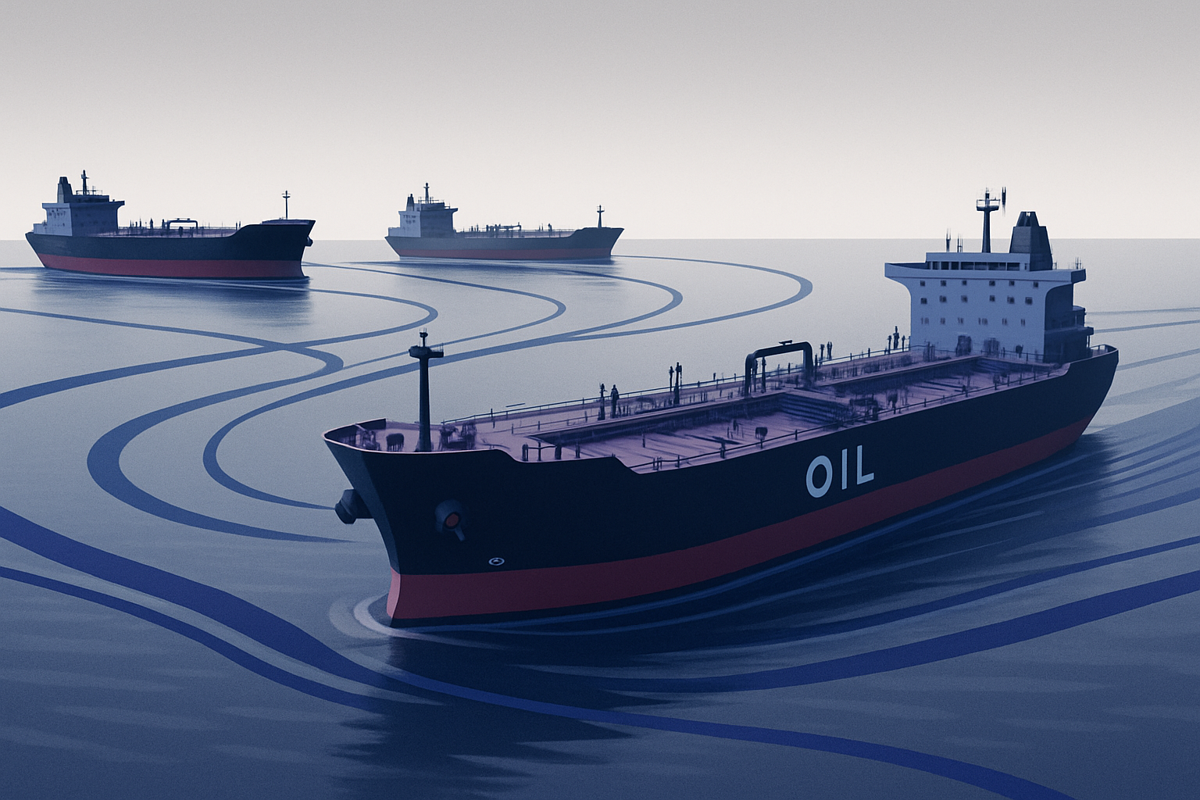
If you’re waiting for oil to make a move, you’re not alone. The Strait of Hormuz is busier than Heathrow on a Friday, with tankers hauling 35 million barrels out of the Persian Gulf since the latest U.S.-Iran deal, according to CNBC (2026-06-24). Russian crude is flooding out of western ports at a record clip, Reuters reports. And yet, the commodity market’s reaction has been a collective shrug. DBC, the broad commodities ETF, hasn’t budged an inch, stuck at $28.55 like it’s glued to the screen.
This is not how the script is supposed to go. When oil tankers jam the world’s most important chokepoint and Russia pumps out barrels like there’s no tomorrow, the textbooks say prices should move. Instead, the algos are snoozing, and traders are left wondering if the market has lost its mind, or if something bigger is at play.
Let’s get granular. Since the U.S.-Iran deal, oil flows through Hormuz have jumped to 4.8 million barrels per day, up sharply from the pre-deal average. Russia, battered by refinery outages after Ukrainian drone strikes, is compensating by exporting even more crude from its western ports. The numbers are staggering: June is set to see record Russian exports, just as global inventories are already running high. Yet, DBC, the ETF proxy for broad commodities, hasn’t moved. Not up, not down. Just flat.
The market’s apathy isn’t just about oil. Commodities as a whole are stuck in neutral. Gold is treading water. Copper is going nowhere. Even agricultural commodities, usually the first to react to supply shocks, are ignoring the headlines. The only thing moving is the news cycle, not the prices.
So what’s going on? The macro backdrop is a cocktail of confusion. Inflation is sticky, but not spiking. Central banks are talking tough, but rate hikes are more threat than reality. Demand from China is tepid, with industrial activity barely registering a pulse. The U.S. economy is humming along, but not enough to soak up the extra barrels. The result: a market that’s flush with supply and paralyzed by uncertainty.
Historically, spikes in Hormuz flows have triggered oil rallies. The last time we saw this kind of volume, Brent crude jumped 15% in a month. But this time is different. The market is pricing in geopolitical risk, but it’s also discounting it just as fast. Every tanker that clears the strait is another data point for the “everything is fine” crowd. Until it isn’t.
Correlation breakdowns are everywhere. DBC used to move in lockstep with oil volatility. Now, the ETF is a dead zone, with realized volatility scraping multi-year lows. The only thing flatter than the price action is the VIX. The algos have gone from panic to paralysis, and traders are left staring at screens, waiting for a catalyst that refuses to come.
The analysis here is simple but brutal: supply is winning. The flood of Russian and Iranian barrels is overwhelming any demand-side narrative. Inventories are high, storage is cheap, and the market is calling the bluff of every geopolitical headline. The reflexive cycle that used to drive oil spikes, headline, panic, price rally, rinse, repeat, has broken down. Now, it’s all about fundamentals, and the fundamentals are boring.
But boring doesn’t mean safe. The market’s complacency is itself a risk. If anything disrupts the flow, another drone strike, a shipping incident, a sudden demand spike, the reaction could be violent. For now, though, the path of least resistance is sideways.
Strykr Watch
The technicals are as flat as the fundamentals. DBC is locked at $28.55, with support at $28 and resistance at $29.20. The 200-day moving average is parked at $28.75, acting as a gravity well for price action. RSI is stuck at 48, signaling a market in stasis. Watch for volume spikes, any surge above average could signal the end of the calm. Until then, the range is your friend.
The risks are obvious but ignored. A sudden supply disruption, be it from Hormuz, Russia, or an OPEC surprise, could jolt the market awake. If inventories start to draw down faster than expected, the rally could be sharp and unforgiving. There’s also the risk of a macro shock: a Fed rate hike, a China demand rebound, or a dollar spike could all shift the narrative overnight. For now, the market is betting against volatility. That’s a dangerous game.
Opportunities are there for the patient. Range trading DBC between $28 and $29.20 is the low-stress play. For the bold, a breakout above $29.20 targets the $30 level, where the next resistance cluster sits. On the downside, a break below $28 opens the door to $27.50. Keep stops tight and size small, when this market moves, it will move fast.
Strykr Take
Don’t mistake calm for safety. The oil and commodities market is a coiled spring, not a dead weight. The record flows through Hormuz and Russia’s export surge are masking deeper risks. When the catalyst hits, and it will, the move will be violent. For now, trade the range, but keep your finger on the trigger. The next headline could be the one that finally wakes this market up.
Sources (5)
The tech stocks now leading this bull market are far more volatile than the old guard
This new chapter started when the early AI stalwarts began serving as the next kingmakers of the market.
Did the Trump White House just give Warsh the green light to hike interest rates? This analyst thinks so.
Treasury Secretary Scott Bessent has floated the idea of a single “tap the brakes” rate hike.
The Semiconductor Mirage: Reflexivity, Cycles, And The Approaching Peak
Invesco Semiconductors ETF exemplifies a reflexive bubble, with AI-driven optimism fueling unsustainable valuations and capital flows. Semiconductor s
Oil tankers with 35 million barrels exited Persian Gulf through Strait of Hormuz since Iran deal
Oil shipments through the Strait of Hormuz have risen to around 4.8 million barrels per day since the U.S.-Iran deal, according to Kpler. Oil flows in
Russia set to export record oil volumes from western ports in June, sources say
Russia is set to ship record volumes of crude from its main western ports in June as refinery outages following Ukrainian drone attacks push more ba