
Strykr Analysis
NeutralStrykr Pulse 52/100. Russell’s silence is not bullish or bearish, just dangerous. Threat Level 2/5.
If you’re the kind of trader who wakes up hoping for fireworks, the Russell 2000’s current state is a cruel joke. IWM has been nailed to $290.47 for four consecutive prints, a price action so flat you could use it as a spirit level. In a market where AI stocks are melting up and Japanese bonds are melting down, small caps have apparently decided to take a vow of silence. But don’t mistake this for tranquility. In markets, boredom is often the mask that chaos wears before the main event.
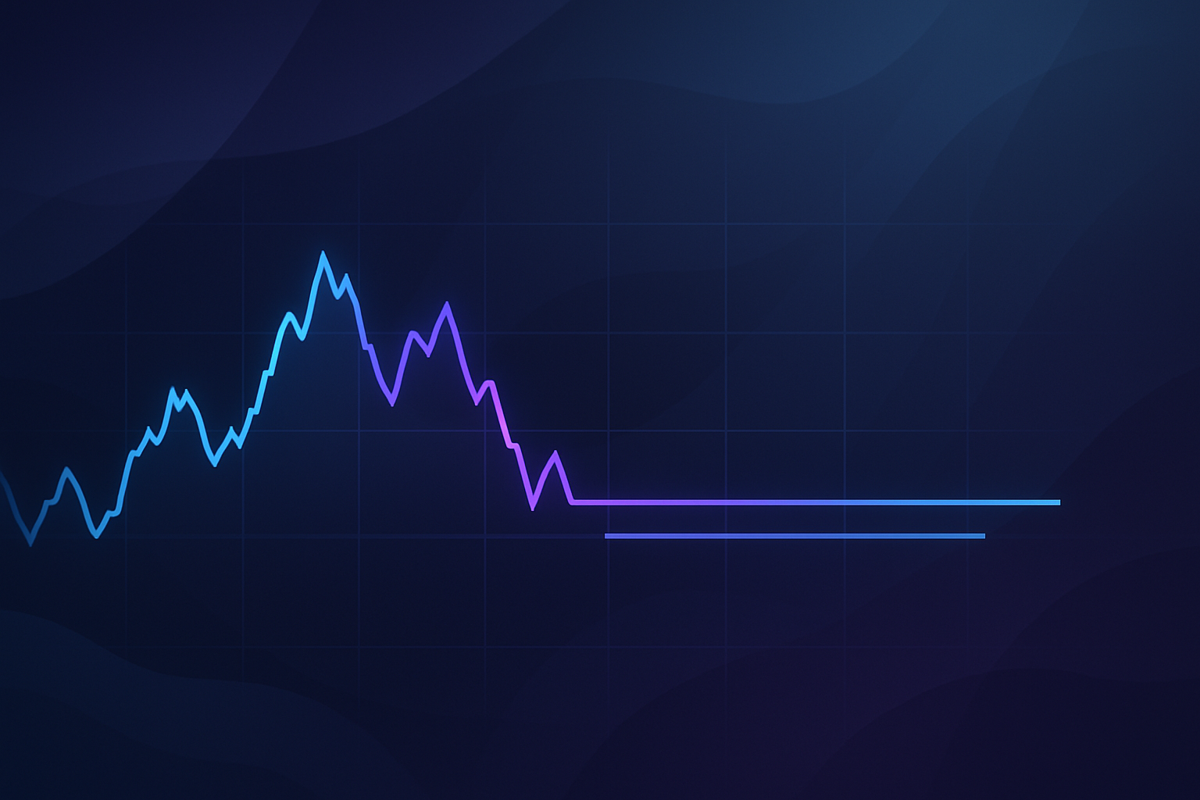
Let’s get granular. The Russell 2000 ETF (IWM) has not budged from $290.47 in the last 24 hours. No wick, no tail, just a perfect horizontal line. This is not just rare, it’s statistically bizarre. Even in the dog days of summer, you expect at least a little noise. The last time small caps were this inert, it was 2020 and the world was locked indoors. Now, with the S&P 500 in full AI euphoria and Japanese yields at 40-year highs, the Russell is the only major asset class refusing to play along.
The news cycle is a fever dream of AI, central banks, and geopolitical anxiety. The S&P 500 is posting historic gains, led by chipmakers and the AI trade. Japanese bonds are flashing red. Even copper, the market’s favorite economic weathervane, is stuck in neutral. But the Russell’s inertia is unique. Small caps are supposed to be the canary in the coal mine for risk appetite and economic growth. Right now, the canary is asleep.
Context matters. Historically, periods of extreme low volatility in the Russell 2000 have been followed by sharp moves, usually down. The last major volatility spike in small caps came in late 2022, when a similar period of calm was shattered by a growth scare and a 15% drawdown in a matter of weeks. The current setup is eerily reminiscent.
Cross-asset flows are telling. Money is pouring into mega-cap tech and AI, leaving small caps to gather dust. The Russell’s underperformance relative to the S&P 500 is at a multi-year extreme. The spread between IWM and SPY is the widest it’s been since the post-COVID rally. That’s not just a stat, it’s a warning that risk is being mispriced.
The macro backdrop is fraught. The Fed is under political siege, Japanese fiscal policy is a mess, and global growth is wobbling. Yet small caps are priced as if nothing matters. That’s not complacency, it’s denial.
The real risk is that traders are underestimating the potential for a volatility shock. The Russell 2000 is a levered bet on US economic growth, credit conditions, and risk appetite. If any of those pillars wobble, small caps will not just move, they’ll lurch.
Strykr Watch
Technically, IWM is boxed in a tight range. Support sits at $288, with resistance at $293. The 50-day moving average is flat at $290.60, and RSI is stuck at 51. Implied volatility is scraping the bottom of the barrel. This is the kind of tape that makes option sellers rich, until it doesn’t.
A break below $288 opens the door for a quick move to $280. A push above $293 could trigger a squeeze to $300. But for now, the market is daring you to get comfortable.
The bear case is simple: the Russell is a coiled spring, and the next macro shock, be it a Fed surprise, a credit event, or a growth scare, will unwind the calm in a hurry. The bull case? The market is underestimating the resilience of US small businesses, and the next leg higher will be led by a catch-up rally in small caps.
Traders should be straddling the range, selling volatility while it’s cheap, but keeping stops tight. When the move comes, it will be violent.
The risk is not that small caps will drift lower. The risk is that they will gap, leaving complacent traders scrambling for exits. The tape is too quiet for too long. That’s not a forecast, it’s a statistical inevitability.
For the opportunists, the setup is clear. Straddle the range, sell puts and calls, and be ready to flip when the breakout comes. If IWM breaks $293, ride the momentum. If it slips below $288, get short and don’t look back.
Strykr Take
This is not the time to ignore small caps. The market’s collective indifference is the real story. When everyone is chasing AI, the smart money is watching the tape for signs of life in the Russell. The next move won’t be slow. It will be violent, and it will catch the lazy off guard. Strykr Pulse 52/100. Threat Level 2/5. Complacency is the setup. The trade is coming.
Sources (5)
The next wave of AI: Analyst explains how embodied AI is taking shape
Neil Shah of Counterpoint Research discusses the rise of embodied AI, where artificial intelligence is integrated into physical systems such as humano
Jerome Powell warns that politicizing Fed will erode its credibility
Former Fed Chair Jerome Powell on Sunday called the Federal Reserve's independence “a priceless asset” that must be protected, in one of his first maj
The AI Trade Hits Overdrive, Powering Stocks to Historic Gains
The S&P 500 just posted one of its best two-month runs ever. That often means more good times ahead.
Accepting an award for political courage, former Federal Reserve Chair Jerome Powell hinted at why he broke with convention to keep his board seat
Accepting an award for political courage, the Fed governor hinted at why he broke with convention to keep his board seat.
Japanese bond yields are the highest in 40 years. The budget and a 'red flag' from PM Takaichi have markets nervous
Japan's government is preparing a supplementary budget of around 3 trillion yen, or about $19 billion, to replenish reserves and fund fuel and utility