
Strykr Analysis
BullishStrykr Pulse 73/100. Insurance markets are flashing warning lights even as spot prices snooze. Volatility is underpriced. Threat Level 4/5.
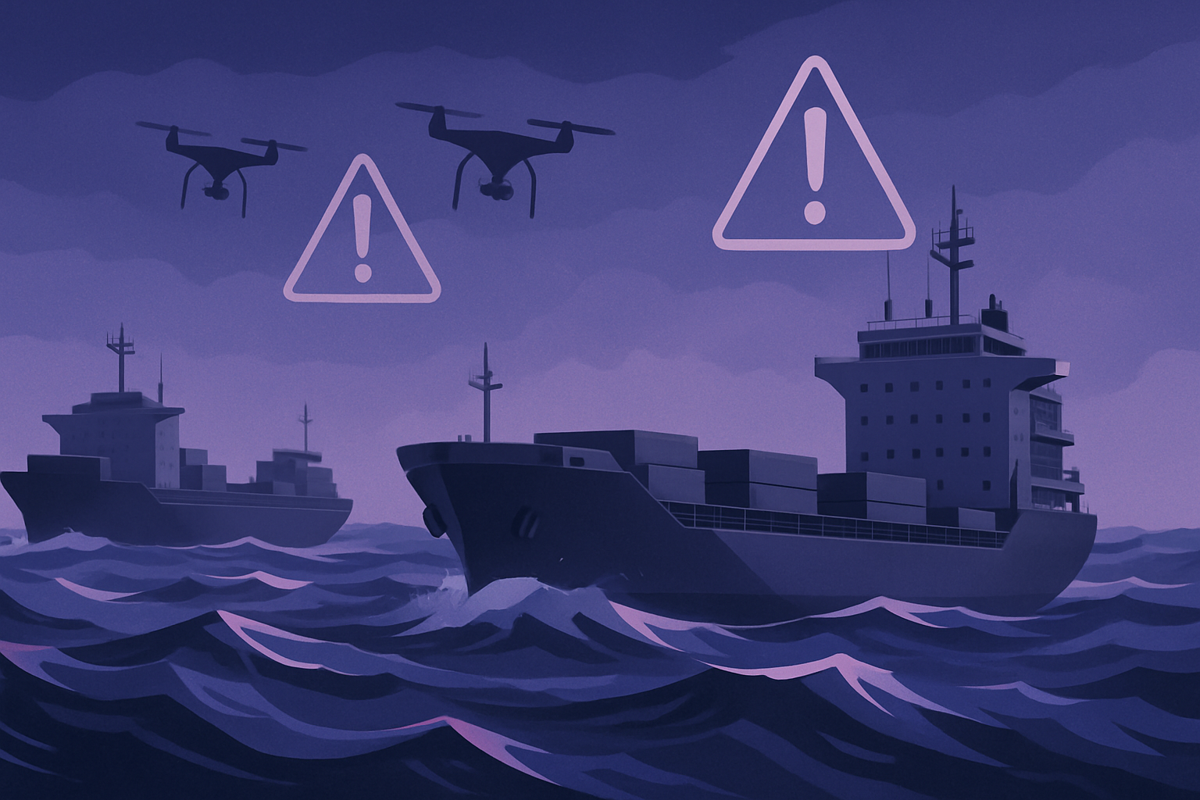
If you’re a trader who still thinks geopolitics is just background noise, the Strait of Hormuz just sent you a bill for your complacency. The U.S. military’s latest strike on Iran, triggered by Tehran’s drone attack on a cargo ship, has done more than just light up cable news. It’s yanked the rug out from under the shipping-insurance market, which had only just started to breathe again after months of war-risk premiums grinding lower.
On June 26, 2026, as reported by MarketWatch and CNBC, a U.S. response to Iran’s drone strike on a commercial vessel in the Strait of Hormuz has reignited fears of a wider regional conflict. The headlines practically wrote themselves: “Iran’s ship attack tests the shipping-insurance market just as war-risk premiums had plunged.” For traders, the real story isn’t the headlines. It’s the sudden, sharp recalibration of risk that’s now rippling through commodities, shipping, and even the FX markets.
Let’s be clear: the Strait of Hormuz isn’t just a narrow waterway. It’s the aorta of global energy flows, with roughly 20% of the world’s oil passing through daily. When drones start falling out of the sky (or worse, not), the cost of insuring a tanker can spike by millions overnight. In the last 24 hours, war-risk premiums, which had been grinding down as ceasefire hopes flickered, have snapped back to life.
But here’s the punchline: the commodities ETF DBC didn’t even twitch. It closed flat at $28.55, refusing to budge as if the world’s most important shipping lane hadn’t just become a live-fire zone. The market’s collective shrug is almost comic. Either traders are so hedged they’re bulletproof, or they’re sleepwalking into the next volatility spike.
The context here is rich. For months, war-risk insurance had been the canary in the coal mine for Middle East risk. As premiums narrowed, it looked like the market was pricing in a durable peace. But the drone strike and subsequent U.S. retaliation have thrown that narrative into a woodchipper. According to the Wall Street Journal, “war-risk premiums narrowed considerably in recent days but could increase again.” That’s analyst-speak for “hope you locked in your rates.”
Historically, every time the Strait of Hormuz heats up, oil volatility follows. In 2019, tanker attacks sent Brent up 5% in a week. In 2024, a similar episode saw insurance costs triple, with knock-on effects for shipping stocks and even the Turkish lira. This time, the market’s inertia is striking. Either the algos are asleep at the wheel, or the risk is being priced somewhere less obvious, think options, freight futures, or even the shadowy corners of the reinsurance market.
The macro backdrop is hardly benign. With U.S.-Iran relations on ice and President Trump (yes, he’s back) saber-rattling on Twitter, the odds of escalation are not remote. Add in the fact that retailers are scrambling to front-load holiday imports before tariffs and fuel surcharges hit, and you have a recipe for supply-chain chaos. The shipping-insurance market is the pressure valve, and right now, it’s hissing.
What’s more, the FX market isn’t immune. Every time the Strait gets dicey, the yen and Swiss franc catch a bid as safe-haven flows surge. The Turkish lira, already battered by inflation, is another likely casualty if shipping disruptions spill over into energy prices.
So why is DBC flat? One theory is that the ETF’s basket is broad enough to dilute the impact of any one shock. Another is that traders are simply waiting for confirmation, nobody wants to be the first to flinch. But history says that when insurance costs spike, spot prices usually follow, even if it takes a few days for the pain to show up on the tape.
Strykr Watch
Technically, DBC remains stuck in a tight range around $28.55. The ETF has been consolidating for weeks, with resistance at $29.20 and support at $28.10. RSI is neutral at 51, and the 50-day moving average is flatlining. In other words, the market is coiled, not trending. But under the hood, the options market is starting to price in higher volatility. Implied vols on oil and shipping names have ticked up, even if spot hasn’t moved. That’s often the tell before a bigger move.
Watch for a break above $29.20 to confirm a bullish reversal, especially if insurance premiums keep climbing. If support at $28.10 fails, look out below, macro traders will pile in on the short side, betting on a risk-off cascade.
The bear case is that this is just another headline risk that fizzles. But the technicals say the next move could be sharp, whichever way it breaks.
The risk, of course, is that traders are underestimating the tail risk of a wider conflict. If the U.S. and Iran escalate, shipping lanes could close, oil could spike, and DBC could finally wake up from its slumber. On the other hand, if cooler heads prevail, the market could go right back to sleep.
For now, the opportunity is in the options market. Volatility is cheap relative to realized risk, and a straddle or strangle on DBC could pay off handsomely if the market finally reacts. Alternatively, traders could look at shipping stocks or even the Turkish lira as more leveraged ways to play the risk.
Strykr Take
The Strait of Hormuz isn’t just a headline risk, it’s a volatility machine hiding in plain sight. The fact that DBC hasn’t moved is either a sign of market genius or collective denial. My money is on the latter. The insurance market is flashing red, and sooner or later, spot prices will catch up. For traders, this is a coiled spring. Don’t get caught flat-footed when it snaps.
Sources (5)
Tech stocks just had one of their worst weeks in a year. Here's how AI momentum went off the rails.
It one of the worst weeks for tech stocks of the year, and Wall Street spent much of it confronting a question it had been too euphoric to ask: what e
Credo: The AI Memory Supercycle Needs More Bandwidth
Micron's latest earnings commentary reinforces the AI memory supercycle, supported by ongoing constraints in bandwidth, capacity, latency and power ef
U.S. Stocks Down as AI Fears Offset Fuel-Price Relief
The Dow Jones Industrial Average and the S&P 500 both declined 0.1%, while the tech-heavy Nasdaq Composite slipped 0.2%.
Retailers Rush In Holiday Imports Early to Avoid Looming Costs
New tariffs and fuel surcharges are sparking competition for space on containerships.
U.S. strikes Iran after Trump accuses Tehran of ceasefire violation in Strait of Hormuz
The U.S. military conducted strikes against Iran in response to what President Donald Trump said was Tehran's violation of a ceasefire by launching dr