
Strykr Analysis
BearishStrykr Pulse 38/100. Complacency is masking systemic risk. Threat Level 4/5.
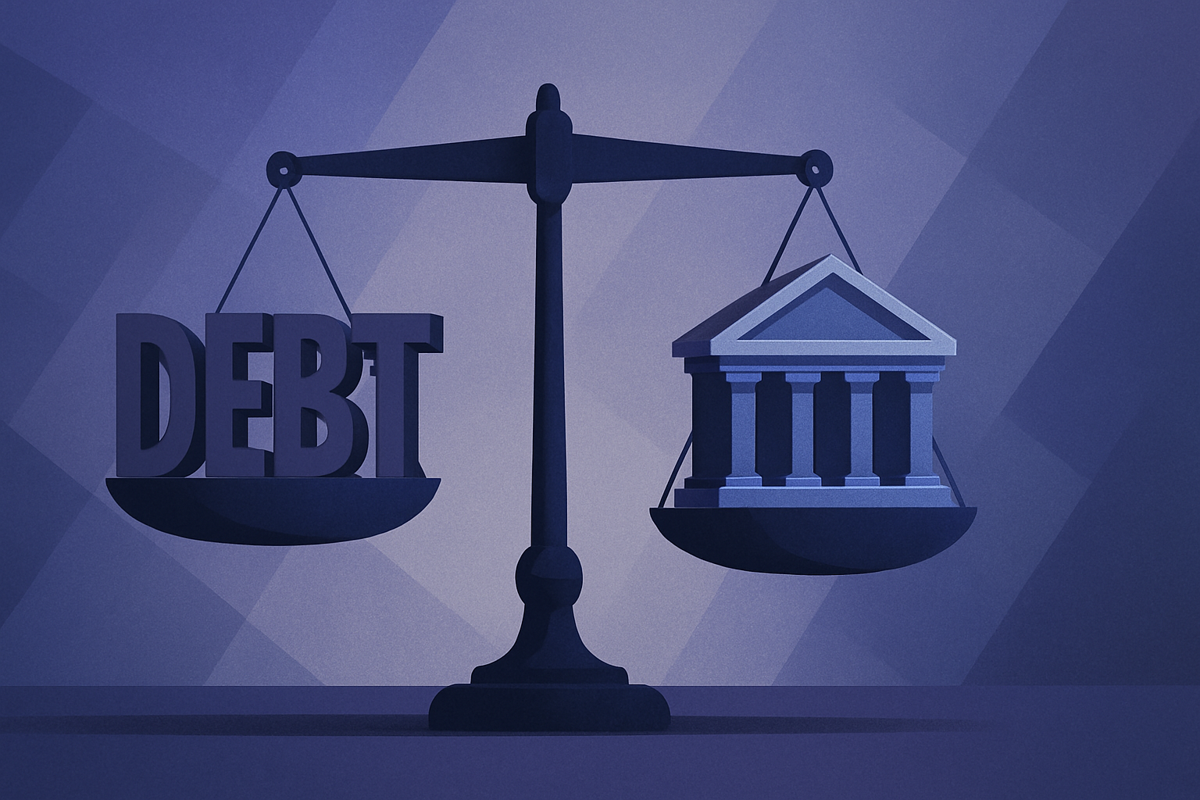
If you want a snapshot of 2026’s market psychology, look no further than the latest Federal Reserve stress test results. Wall Street cheered as all 32 major U.S. banks sailed through the Fed’s annual doomsday scenario, boasting enough capital to absorb a cool $708 billion in losses (cnbc.com, 2026-06-24). The headlines screamed resilience, the S&P 500 barely blinked, and the financial sector patted itself on the back. But behind the regulatory victory lap, a far more existential threat is quietly metastasizing: the U.S. national debt now stands at 100% of GDP, a level not seen since the aftermath of World War II (etftrends.com, 2026-06-24). And the market’s reaction? Crickets.
The disconnect is almost comical. On one hand, you have regulators and investors celebrating the fact that banks can survive a hypothetical recession. On the other, the U.S. government is borrowing at a pace that would make even the most aggressive PE shop blush. The Treasury’s IOU pile is now so tall it casts a shadow over the entire financial system. Yet the bond market is eerily calm, with yields grinding sideways and credit spreads refusing to budge. It’s as if everyone collectively decided that debt doesn’t matter, until it does.
Let’s lay out the facts. The Fed’s stress test modeled a severe global recession, with unemployment spiking and asset prices tanking. The result? All banks remained above minimum capital requirements, even in the face of massive loan losses. The message is clear: the financial system is robust, at least on paper. But while the banks are built to survive Armageddon, the federal government’s balance sheet is a different story. At 100% debt-to-GDP, the U.S. is in uncharted territory for a peacetime economy. Academic research has long flagged the 90% threshold as a danger zone for growth and fiscal stability. We’re now well past that, and the market’s collective indifference is the real risk.
The macro context only adds to the absurdity. The U.S. economy is still posting solid consumer numbers, but beneath the surface, capex is slowing and the AI boom that fueled last year’s rally is already showing signs of fatigue. Tech stocks are wobbling, dividend growth is stalling, and the rotation into ‘safe’ sectors is more a trickle than a flood. Meanwhile, the Treasury keeps auctioning off record amounts of debt, and foreign buyers are quietly stepping back. Japan and China, once the biggest holders of U.S. paper, are now net sellers. The only thing keeping yields from blowing out is the market’s blind faith in the Fed’s backstop.
Here’s the kicker: the Fed’s own regulatory overhaul, announced by Vice Chair Bowman, is supposed to make the system safer by focusing on core financial risks. But the biggest risk isn’t lurking on bank balance sheets, it’s sitting right there on the government’s books. The stress test doesn’t model what happens if the market finally decides that U.S. debt is no longer risk-free. That’s the scenario nobody wants to talk about, but it’s the one that matters most.
If you’re a trader, you know that markets can ignore reality for a long time, until they can’t. The last time debt levels were this high, the U.S. had just won a world war and was about to embark on decades of growth. Today, the demographics are worse, productivity is sluggish, and the political will for fiscal restraint is nonexistent. The CBO’s latest projections show the debt-to-GDP ratio rising for as far as the eye can see. At some point, the math stops working.
So why isn’t the market panicking? Part of it is the TINA (There Is No Alternative) effect, U.S. Treasuries are still the cleanest dirty shirt in a world of negative real yields. Part of it is the Fed’s implicit promise to step in if things get hairy. And part of it is simple inertia. But make no mistake: the risk is building, even if it’s not showing up in price action yet.
Strykr Watch
The 10-year Treasury yield is hovering around 4.10%, stuck in a range as traders debate whether the next move is up or down. Credit spreads are tight, but watch for any widening as a sign that the market is starting to price in fiscal risk. The S&P 500 is treading water near all-time highs, but financials are lagging as investors quietly hedge their bets. The dollar is stable, but any sign of foreign selling in the Treasury market could change that in a hurry.
Technical levels to watch: 10-year yield above 4.25% would be a warning sign, while a break below 3.90% would signal renewed confidence. S&P 500 support sits at 5,400, with resistance at 5,600. Financial sector ETFs are struggling to hold above key moving averages, if they break, look out below.
The options market is pricing in low volatility, but skew is starting to build in out-of-the-money puts on Treasuries and financials. That’s a classic sign that smart money is quietly hedging against a tail risk event.
The biggest risk is that the market’s complacency turns into panic. If a Treasury auction goes badly or a rating agency finally blinks, yields could spike and risk assets would not be far behind. Keep an eye on foreign central bank holdings and bid-to-cover ratios at upcoming auctions. If those start to slip, it’s time to get nervous.
Opportunities are emerging for those willing to fade the consensus. Shorting duration on any rally in Treasuries, buying protection via out-of-the-money puts, or rotating into sectors with real pricing power are all on the table. Just don’t get too cute, this is a slow-moving train wreck, and timing is everything.
Strykr Take
The market’s collective shrug at 100% debt-to-GDP is the real canary in the coal mine. The stress test euphoria is masking a much bigger risk, and when the music stops, it won’t be pretty. Stay vigilant, hedge your tail, and don’t drink the Kool-Aid.
datePublished: 2026-06-25 00:15 UTC
Sources (5)
Where Investors Can Still Find Dividend Growth in 2026
The corporate world is awash in capex. Leaders in the artificial intelligence (AI) arms race are pouring hundreds of billions of dollars into tech pro
Fed Reshapes Bank Oversight Unit to Target Core Financial Risks
Federal Reserve Vice Chair for Supervision Michelle W. Bowman has completed a reorganization of the agency's bank oversight unit that she announced in
Stocks Mixed as AI Weakness Offset by Consumer Strength
U.S. stocks finished mixed Wednesday as investors cashing out bets on high-flying technology and artificial intelligence companies continued to rotate
Owning Up to What We Owe
US national debt held by the public now stands at around 100% of GDP — approaching post-WWII highs and well above the 90% threshold that academic rese
Debunking The Bulls' Main Arguments On AI
Semiconductor stocks, including Nvidia, are in a massive bubble reminiscent of the dotcom era, driven by cyclical demand, circular deals, and unsustai