
Strykr Analysis
NeutralStrykr Pulse 61/100. Oil is frozen, but volatility is building. Directional risk is high, but the market is not picking a side yet. Threat Level 3/5.
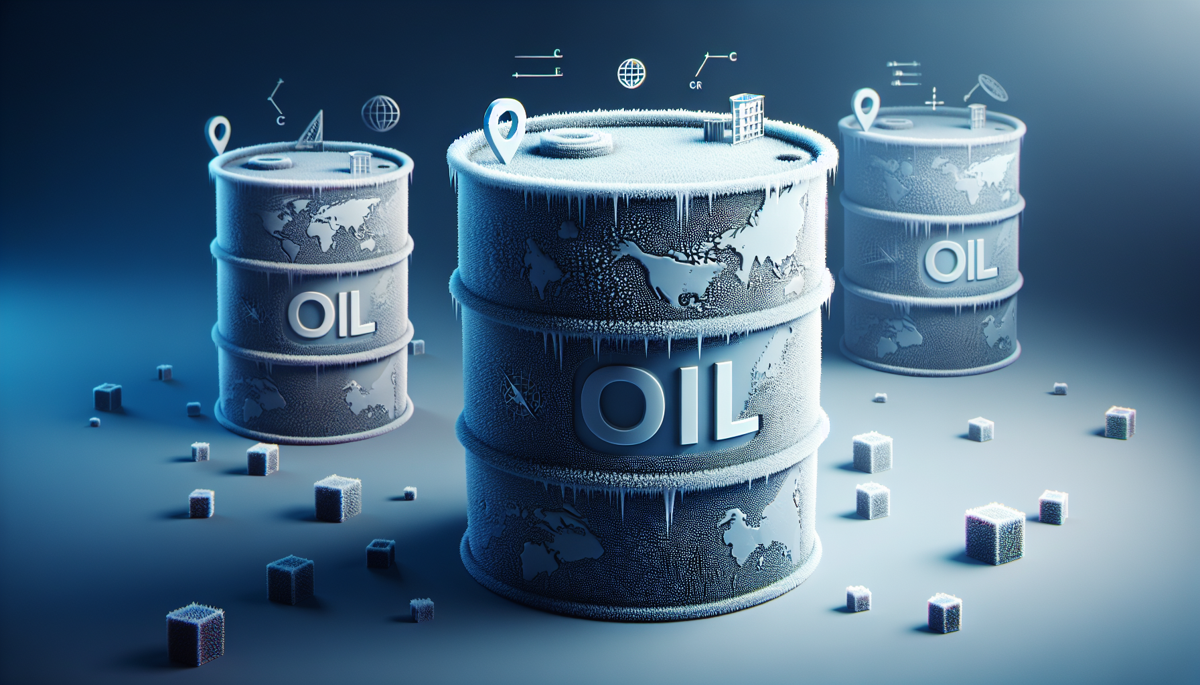
You would think that with bombs falling in the Middle East and Fed officials warning about inflationary oil shocks, crude would be on a tear. Instead, WTI is sitting at $2.99, a price so low it looks like a typo from the 1970s. Welcome to the great oil paradox of 2026, where the world is on fire, but the oil market is in a deep freeze. For commodities traders, this is the equivalent of watching a hurricane approach while the insurance market prices in a sunny day.
Let’s get the facts straight. WTI crude has flatlined at $2.99 for the past 24 hours, showing zero movement despite a barrage of headlines that would normally send prices into orbit. The Iran war is raging, Powell is openly linking higher inflation projections to energy prices, and the Cboe Crude Oil ETF Volatility Index is spiking. Yet the spot price refuses to budge. The market is either broken, manipulated, or so numb to risk that it can’t see the freight train coming.
The timeline reads like a checklist of bullish catalysts. Middle East tensions have escalated, with direct impacts on supply chains and shipping lanes. The Fed has acknowledged that surging oil prices are feeding into inflation expectations, and the Atlanta Fed’s latest survey shows companies are bracing for higher costs. Normally, this would be the perfect storm for an oil rally. Instead, traders are staring at a screen that hasn’t moved since yesterday.
The context is even stranger. Historically, oil has been the go-to asset for hedging geopolitical risk. In 2007, a similar backdrop of Middle East instability and Fed caution sent crude prices soaring. Today, the market seems paralyzed. Part of the explanation lies in the structure of the oil market itself. Physical supply is ample, with US shale producers pumping at record levels and inventories well above the five-year average. Meanwhile, demand growth is tepid, with China’s economy sputtering and global transport activity lagging pre-pandemic levels. The paper market is awash with speculative shorts, and every rally attempt is met with a wall of selling from CTAs and systematic funds.
But the real story is the disconnect between volatility and price. The Cboe Crude Oil ETF Volatility Index has jumped to multi-month highs, signaling that traders are bracing for a move. Yet spot prices remain glued to the floor. This is a classic setup for a volatility explosion. When the dam finally breaks, it won’t be a gentle drift higher. It will be a face-ripping squeeze that leaves both bulls and bears scrambling for cover.
The absurdity of the current market cannot be overstated. We have a war in the world’s most important oil-producing region, central banks warning about inflation, and yet the price of crude is stuck at levels that barely cover the cost of production. This is not sustainable. Either the geopolitical risk premium will reassert itself, or the market will have to reckon with a new reality where oil is no longer the global macro driver it once was.
Strykr Watch
Technically, WTI is trapped in a deathly tight range. The $3.00 level is the obvious resistance, with a cluster of sell orders rumored just above. On the downside, $2.90 is the nearest support, with stop-losses stacked below. The daily RSI is stuck at 50, signaling a market in stasis. Moving averages are flatlining, with the 50-day and 200-day converging at $2.95. This is the calm before the storm.
Volatility is the only thing moving. The Cboe Crude Oil ETF Volatility Index is flashing red, with implied vols for front-month options spiking to 30%, well above the historical average. The market is bracing for a move, but the direction is anyone’s guess. If the Iran war escalates or supply disruptions hit the tape, expect a violent breakout to the upside. If not, the grind lower will continue until something breaks.
The risks are obvious. The biggest is a sudden escalation in the Middle East, which could send oil prices soaring in a matter of hours. The second is a surprise drawdown in US inventories, which would catch the market offside. Finally, there’s the risk of a macro shock, if global growth collapses, demand will evaporate and oil will have nowhere to go but down.
But with risk comes opportunity. For traders with patience, this is the perfect setup for a breakout trade. Long WTI on a break above $3.00 with a stop at $2.90 targets a move to $3.20 and beyond. Alternatively, shorting into failed rallies with a stop above $3.05 could catch a quick move lower. For the brave, selling strangles at current implieds offers juicy premium, but only for those with iron stomachs.
Strykr Take
This is not a market for tourists. Oil is coiled like a spring, and the next move will be violent. The risk-reward is skewed to the upside, but only if you can survive the whipsaw. Strykr Pulse 61/100. Threat Level 3/5.
datePublished: 2026-03-18 21:01 UTC
Sources (5)
Powell Says He Will Remain as Fed Chair Until Successor Is Confirmed
Jerome H. Powell, who leads the central bank, also said he would not leave the Fed until a criminal investigation into his handling of renovations was
It's Starting To Feel A Lot Like 2007
Current market conditions closely resemble the pre-crisis environment of 2007 in several primary ways, raising caution for investors. Echoes of the su
March Fed Meeting: Policymakers Stay The Course Despite Negative Externalities
The March FOMC meeting reflected continued stability despite the multitude of negative externalities. The negative externalities include declining pay
Here are five takeaways from the Federal Reserve meeting
Here are five takeaways from the Federal Reserve meeting.
Powell: Oil shock 'part of' higher inflation projection for 2026
Federal Reserve Chair Jerome Powell explains what factors in the economy are contributing to the higher inflation projection for 2026.