
Strykr Analysis
NeutralStrykr Pulse 58/100. Momentum is stalled, but no signs of panic. Volatility is low, but risks are rising. Threat Level 2/5.
If you’re looking for a poster child for the AI-fueled market mania, it’s hard to beat XLK. The Tech Select Sector SPDR ETF has been the S&P 500’s rocket booster, riding the AI narrative to dizzying heights while the rest of the market tries to keep up. But as of June 1, 2026, something unusual is happening: XLK is flatlining at $191.01, refusing to budge even as the S&P 500 posts one of its best two-month runs in history. For traders used to relentless melt-ups, this sudden inertia is almost unsettling.
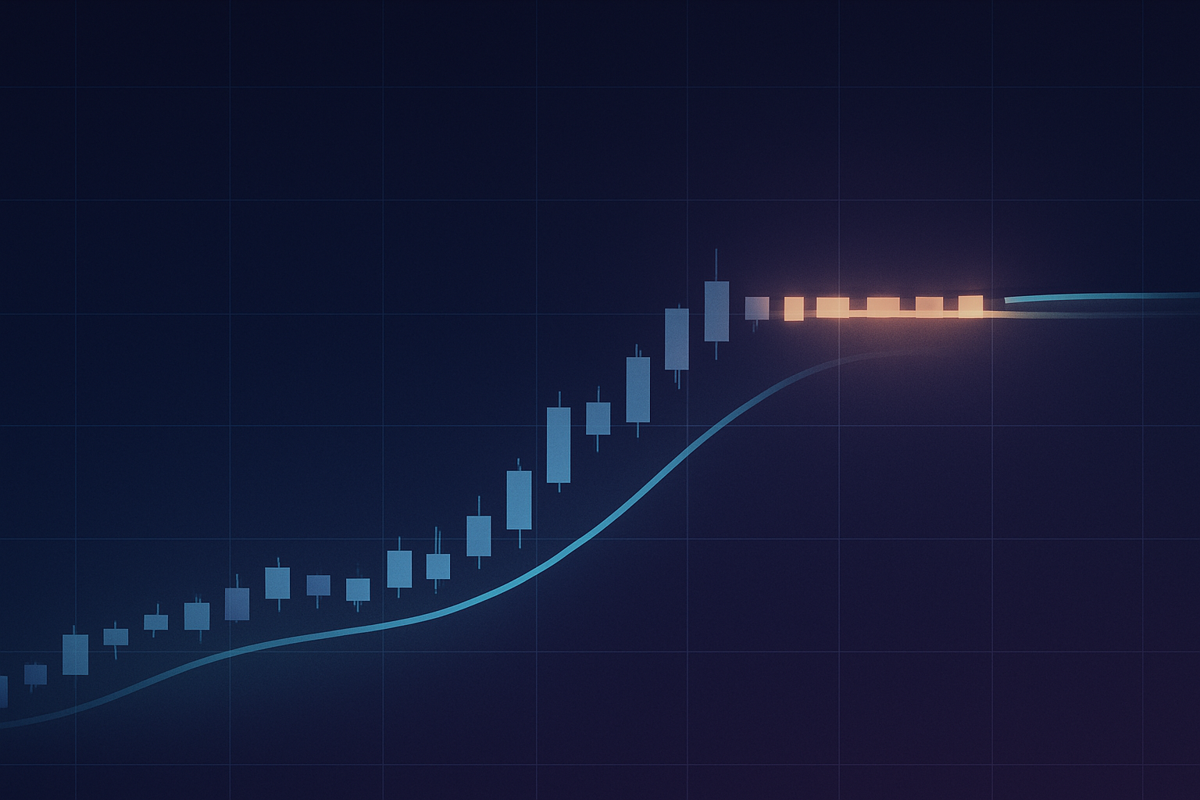
Let’s run the tape. XLK’s year-to-date rally is still a thing of beauty, up more than 35%, with barely a hiccup along the way. The ETF has outperformed not just the broader market but also most of its own components, thanks to the AI trade’s gravitational pull on megacaps like Microsoft, Apple, and Nvidia. The Wall Street Journal calls it “historic,” and for once, that’s not hyperbole. But over the last week, the music has stopped. XLK has been pinned at $191.01 for four straight sessions, with volume drying up and intraday ranges collapsing to levels not seen since the pandemic’s early days.
What’s going on here? On the surface, it looks like a classic consolidation after a monster run. But dig deeper, and the story gets more interesting. The AI narrative is still dominant, but cracks are starting to show. Major companies are suddenly worried about the cost of AI adoption, as highlighted by a recent YouTube segment that notes chipmakers’ surges are “lending urgency to the debate over whether investors are buying into hype or real earnings power.” Meanwhile, Apollo’s chief economist is out there saying there’s “zero evidence” of AI-related job losses, even as tech CEOs cite AI as the reason for layoffs. The disconnect between narrative and reality is getting harder to ignore.
Historically, periods of flatlining in XLK have often preceded either explosive breakouts or sharp corrections. In 2021, a similar stall at $160 was followed by a 12% correction as rates spiked and growth stocks got pummeled. But in 2023, a two-week pause at $140 set up a 20% melt-up as AI mania took hold. The difference this time? Macro conditions are less forgiving. With the Fed’s independence suddenly a political football (thanks, Jerome Powell), and Japanese bond yields at 40-year highs, the risk of a global rates shock is no longer theoretical.
Cross-asset signals are mixed. Commodities are dead flat, DBC hasn’t moved in days, suggesting no inflation panic yet. But the bond market is sending warning flares. If yields keep grinding higher, tech multiples will have to compress, no matter how many ChatGPT clones Nvidia can sell. At the same time, market breadth is improving, with non-tech sectors finally showing signs of life. That’s good for the S&P 500, but it could mean XLK’s leadership is about to be challenged.
The real question is whether this is a healthy pause or the start of something uglier. The bulls will point to the lack of selling pressure, no one’s dumping XLK, they’re just not buying more. The bears will argue that when the hot money stops chasing, it’s only a matter of time before the air comes out of the trade. The truth is probably somewhere in between. As long as the AI narrative holds, XLK can grind sideways or even break higher. But if earnings disappoint or macro headwinds intensify, the downside could be swift.
Strykr Watch
Technically, XLK is perched right at resistance. The $191.01 level has become a magnet, with price refusing to move for four sessions. Support sits at $187.50, with the 50-day moving average lurking just below at $185. RSI is neutral, and volatility has collapsed, Strykr Score is at a sleepy 19/100. The key to watch is whether XLK can break above $192 on volume. If it does, the next target is $200, a level that would mark a new all-time high. On the downside, a break below $187.50 could open the door to a quick retest of $180, especially if bond yields spike or the AI narrative loses steam.
Options flows are telling. Implied volatility is scraping the bottom, with traders selling calls and puts in equal measure. The market is betting on more of the same, low volatility, low drama. But that’s often when the biggest moves happen. Keep an eye on open interest at the $190 and $195 strikes. A sudden surge could signal that someone’s betting on a breakout (or a breakdown).
The biggest risk is that the AI trade is simply exhausted. If tech earnings disappoint or if macro shocks hit, XLK could unwind quickly. But the opportunity is clear: if the ETF breaks above $192, the path to $200 is wide open. For now, patience is a virtue. Wait for the breakout or the breakdown, don’t chase the chop.
The bear case is that XLK is a crowded trade, and when the unwind comes, it will be fast and brutal. The bull case is that AI is still in the early innings, and this is just a pause before the next leg higher. The truth? Watch the tape. The market will tell you which story wins.
Strykr Take
XLK’s stall at $191 is the market’s way of saying “prove it.” The AI narrative is still powerful, but the easy money has been made. For now, this is a trader’s market, wait for the breakout or the breakdown, and don’t get lulled to sleep by the calm. The next move will be big, whichever way it goes.
Sources (5)
Jerome Powell warns that politicizing Fed will erode its credibility
Former Fed Chair Jerome Powell on Sunday called the Federal Reserve's independence “a priceless asset” that must be protected, in one of his first maj
The AI Trade Hits Overdrive, Powering Stocks to Historic Gains
The S&P 500 just posted one of its best two-month runs ever. That often means more good times ahead.
Accepting an award for political courage, former Federal Reserve Chair Jerome Powell hinted at why he broke with convention to keep his board seat
Accepting an award for political courage, the Fed governor hinted at why he broke with convention to keep his board seat.
Japanese bond yields are the highest in 40 years. The budget and a 'red flag' from PM Takaichi have markets nervous
Japan's government is preparing a supplementary budget of around 3 trillion yen, or about $19 billion, to replenish reserves and fund fuel and utility
Korea And Japan Worry Me More Than The Strait Of Hormuz
The Strait of Hormuz and its impact on the commodities prices are concerning. But in the end, I expect mostly near-term impacts.