
Strykr Analysis
BearishStrykr Pulse 32/100. Trust is gone, liquidity is thin, and regulatory heat is rising. Threat Level 5/5.
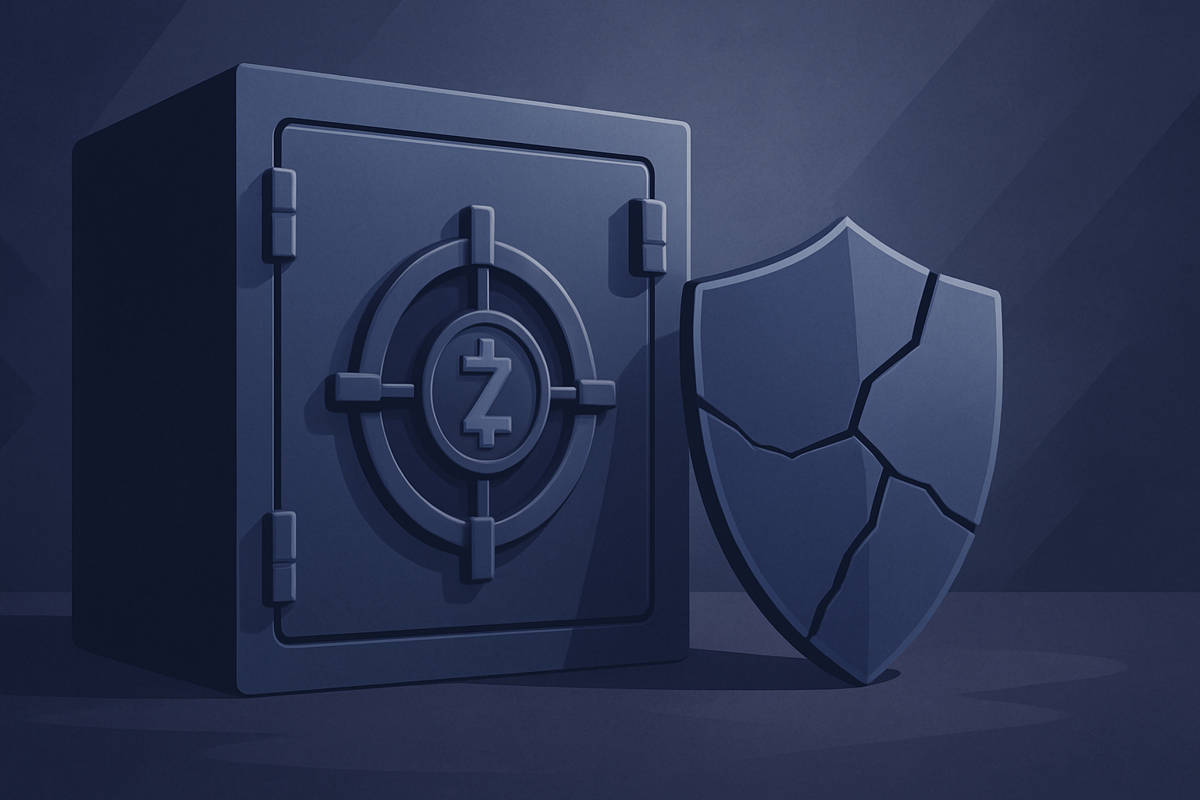
If you thought crypto was done serving up existential risk, Zcash just reminded everyone that the graveyard is always open for new tenants. In a week when the market was supposed to be digesting macro panic and ETF outflows, ZEC managed to vaporize up to 57% of its value in a single bug-induced nosedive. The Winklevoss twins, undeterred, stepped in to back the project, but the question is whether anyone else will follow them into the privacy coin foxhole.
The news broke with all the subtlety of a margin call. A critical bug in Zcash’s protocol led to a cascade of liquidations, sending ZEC spiraling below $15 before clawing its way back to the mid-teens. According to CryptoBriefing, the exploit triggered a wave of forced selling and panic withdrawals, with some exchanges temporarily suspending ZEC trading to stem the bleeding. The Winklevoss twins, whose Gemini exchange has long championed privacy coins, issued a statement reaffirming their support and pledging new resources for ZEC’s audit and infrastructure. That’s the PR version. The market’s version was a Darwinian cull: over $300 million in market cap evaporated in hours, and liquidity on major books thinned to a level that would make even DeFi degens blush.
This wasn’t just a blip in a sea of red. The Zcash incident is a microcosm of the structural fragility that still haunts the privacy coin sector. In the past, Monero and Dash have survived scares, but ZEC’s collapse was both faster and more public. The bug, reportedly related to shielded transaction verification, wasn’t just technical. It was a confidence event. When privacy coins lose trust, they lose everything. The broader crypto market, already reeling from a $2.5 trillion liquidation triggered by a hot jobs report and AI panic, simply had no risk appetite left for ZEC’s drama. Bitcoin ETF outflows hit $1.72 billion, and the flagship coin itself broke below $60,000 support, dragging the entire altcoin complex with it. But ZEC’s 57% drawdown was in a league of its own.
Historically, privacy coins have thrived in periods of regulatory overreach and surveillance anxiety. The 2021-22 cycle saw ZEC and XMR outperform when stablecoins faced scrutiny and KYC rules tightened. But 2026 is a different animal. The regulatory environment is more hostile, with the EU and US both targeting privacy protocols for AML enforcement. Liquidity is thinner, and institutional interest is basically zero. The Zcash bug, then, is not just a technical failure but a market structure indictment. When the only buyers left are true believers and the odd VC with a sunk cost problem, the bid vanishes fast. Compare this to Bitcoin, where even after a $2.5 trillion wipeout, long-term holders are still absorbing distressed supply, according to AMBCrypto. ZEC, by contrast, saw its underwater supply spike and its order books hollow out.
It’s tempting to blame this all on the bug, but the real story is about market structure and trust. Privacy coins are inherently fragile because their user base is both niche and adversarial to the mainstream financial system. When things go wrong, there’s no cavalry of ETF inflows or institutional allocators to stabilize the price. The Winklevoss endorsement is nice, but it’s not capital. And in crypto, capital is the only vote that counts. The fact that ZEC was able to recover at all is a testament to the die-hard nature of its community, but the bounce looks more like a dead cat than a new bull cycle.
Regulatory pressure is the other shoe waiting to drop. The Zcash bug will almost certainly be cited in upcoming hearings on crypto risk and AML compliance. The EU’s MiCA regime is already making life difficult for privacy coins, and the US Treasury has shown no appetite for nuance. Exchanges are likely to delist or restrict ZEC trading further, especially after the recent HTX delisting of a Trump-affiliated stablecoin amid asset freeze controversy. If liquidity dries up further, ZEC could find itself in the same purgatory as Tornado Cash or Secret Network, alive, but untradeable.
Strykr Watch
Technically, ZEC is a minefield. The $15 level is now the line in the sand, with resistance at $18 and a psychological barrier at $20. RSI readings are deep in oversold territory, but that’s a feature, not a bug, in a market where trust is the only real support. Moving averages are all sloping down, and volume is anemic outside of forced liquidations. Any bounce is likely to be met with heavy selling from underwater holders looking to exit on strength. The next real support is down at $10, a level not seen since the darkest days of the last bear market.
If you’re trading ZEC, you’re not looking at technicals so much as liquidity and news flow. Watch for exchange announcements, audit updates, and regulatory headlines. The Winklevosses can provide moral support, but unless they’re willing to provide order book support, the path of least resistance is still down.
The risk is that another bug or regulatory action could trigger another cascade. The opportunity, if you’re brave or reckless enough, is to fade panic and buy capitulation. But this is not a trade for the faint of heart. The volatility is extreme, and the bid can vanish in an instant.
The bear case is simple: if ZEC loses $15, there’s nothing but air down to $10. If it can reclaim $20 and hold, maybe the market will start to believe again. But belief is in short supply right now.
On the opportunity side, the only real play is to buy capitulation and sell any bounce into the $18-20 range. Tight stops are mandatory. If you’re looking for a hero trade, this isn’t it. This is a scalper’s market, not a HODLer’s paradise.
Strykr Take
Zcash’s 57% crash is a brutal reminder that trust is the only real collateral in crypto. The Winklevosses can tweet all they want, but unless liquidity returns and the protocol is bulletproofed, ZEC is stuck in the penalty box. For traders, this is a volatility play, not an investment. If you must trade it, keep your stops tight and your risk appetite tighter. The graveyard is always open, and ZEC just dodged a plot, barely.
datePublished: 2026-06-07 19:15 UTC
Sources (5)
Winklevoss twins back Zcash following bug scare that tanked ZEC by up to 57%
The Zcash bug incident underscores the inherent risks in privacy coins, prompting calls for enhanced verification to bolster investor confidence. Wink
XRP Gains Traction While Bitcoin And Ethereum Lose Capital
In a crypto market dominated by capital outflows, XRP stands out as an exception. While investment products linked to Bitcoin and Ether experience wit
Plasma team moves $9.6M in XPL – Can bulls ignore THESE warning signs?
XPL retests $0.07020 as bearish momentum persists.
Solana Founder Anatoly Yakovenko Mocks Bernie Sanders' AI Jobs Warning
Solana co-founder Anatoly Yakovenko publicly rejected Senator Bernie Sanders' AI jobs warning. The senator argues artificial intelligence (AI) and rob
Market Analysis: Why Bitcoin and Global Markets Just Collapsed
A hotter-than-expected jobs report and an AI sector panic triggered a $2.5 trillion global market liquidation, dragging Bitcoin to the $60,000 brink.