
Strykr Analysis
BearishStrykr Pulse 22/100. ZEC is in freefall after a critical protocol bug. Trust is shattered, liquidity is gone, and the narrative is toxic. Threat Level 5/5.
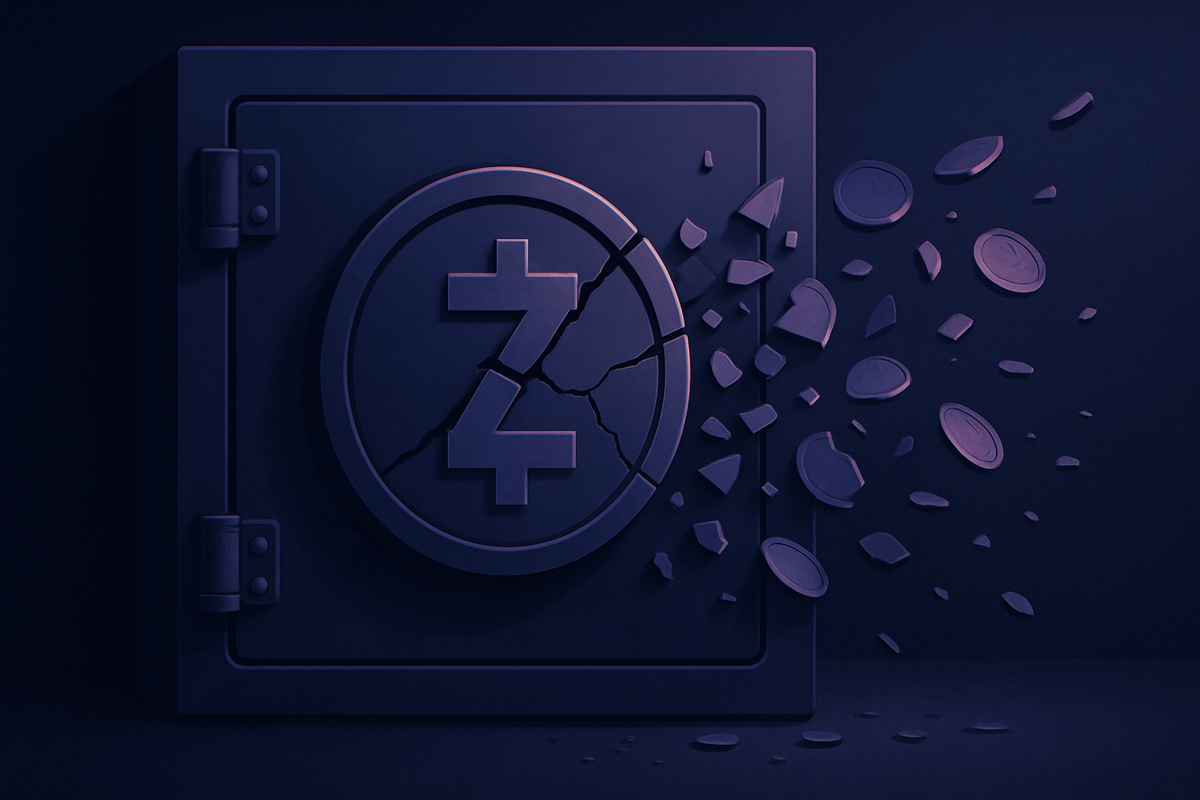
If you want a case study in how fast crypto sentiment can turn, look no further than Zcash. In a market that’s already been battered by macro headwinds and a relentless Bitcoin dominance grind, ZEC just delivered a masterclass in how to vaporize sixty percent of your value in a single session. The culprit: a critical vulnerability in the private Orchard pool, allowing the theoretical creation of counterfeit tokens. The market didn’t wait for a post-mortem, it hit the sell button so hard the order books looked like a war zone.
The numbers are ugly. ZEC is down a staggering 60% since the vulnerability was revealed, according to Cointribune and Blockonomi. The pool’s cryptographic flaw, patched but not forgotten, sent shockwaves through the altcoin complex. Exchanges scrambled to halt deposits and withdrawals, and liquidity vanished faster than you can say “zero-knowledge proof.” The selloff triggered a cascade of forced liquidations as leveraged longs got margin-called into oblivion. If you were looking for a textbook example of how technical risk can become market risk overnight, this is it.
The Zcash drama is not just about one privacy coin. It’s a warning shot for the entire altcoin universe. After a year of regulatory pressure, liquidity fragmentation, and a series of DeFi rug pulls, the market’s tolerance for protocol risk is near zero. Traders are not waiting around for the next shoe to drop. The ZEC wipeout has already bled into correlated assets, privacy coins like Monero and Dash saw double-digit drawdowns, and even blue-chip altcoins are trading with a defensive posture.
This is all happening against a macro backdrop that’s hostile to risk. The latest US jobs report crushed hopes for a Fed rate cut, sending risk assets into a tailspin. Bitcoin dominance is rising, sucking oxygen from the rest of the crypto market. Altcoins, already on the ropes, just got another reason for traders to hit the exits.
The Zcash bug is the kind of event that makes even hardened crypto veterans reach for the antacids. The vulnerability was found in the Orchard pool, which was supposed to be the next-gen privacy layer for ZEC. Instead, it became a liability. The flaw allowed for the creation of counterfeit coins, an existential risk for any cryptocurrency. Zcash developers moved quickly to patch the bug and review turnstile accounting, but the damage was done. Trust, once broken, is hard to rebuild, especially in a market that’s already trigger-happy.
The technical post-mortem is still ongoing, but the market doesn’t care about nuance. It cares about solvency and security. Exchanges like Binance and Kraken halted ZEC deposits within hours, freezing liquidity and trapping panicked holders. On-chain data shows a spike in wallet outflows as whales and funds scrambled to exit positions. The forced selling rippled across the privacy coin sector, with Monero (XMR) and Dash both down over 20% intraday. Even non-privacy altcoins caught some shrapnel, as risk-off sentiment spread.
The Zcash event is a microcosm of the broader altcoin malaise. Regulatory uncertainty, technical risk, and a macro environment that punishes anything not named Bitcoin have created a perfect storm. The days of “just buy the dip” are over. Now, every protocol bug is a potential extinction event. The market is pricing in survival, not upside.
What’s remarkable is how quickly the market repriced risk. ZEC’s implied volatility exploded, with options pricing in another 30% move in either direction over the next week. Funding rates for perpetual swaps flipped deeply negative, as traders paid a premium to be short. Spot liquidity dried up, making it nearly impossible to exit size without nuking the book. This is what panic looks like in real time.
The broader altcoin market is taking notes. The Zcash debacle is a reminder that technical due diligence is not optional. In a world where smart contract exploits and protocol bugs can erase years of value creation overnight, the market is rewarding conservatism. Funds are rotating into Bitcoin and Ethereum, leaving the long tail of altcoins to fend for themselves.
Cross-asset flows confirm the trend. Bitcoin dominance is at multi-year highs, and stablecoin inflows are picking up as traders de-risk. The days of “alt season” are a distant memory. Now, it’s about survival. The Zcash bug is just the latest in a string of events that have shattered confidence in the altcoin complex.
The regulatory backdrop is not helping. With the SEC and other global watchdogs circling, any sign of weakness is met with a swift repricing. Privacy coins are already in the crosshairs, and the Zcash bug gives regulators more ammunition. The market is anticipating tighter controls and potential delistings, adding another layer of risk for traders.
For those still holding ZEC or other privacy coins, the playbook is simple: manage risk aggressively. The technicals are broken, and the narrative is toxic. Until there’s a credible path to restoring trust, expect volatility to remain elevated.
Strykr Watch
Technically, ZEC is a falling knife. The key level to watch is the post-crash low, if ZEC can’t hold above that, the next stop is the 2022 bear market floor. Resistance is now layered at every failed bounce, with the $40 and $55 zones acting as supply walls. RSI is deeply oversold, but in panic markets, that’s a feature, not a buy signal. Volume is spiking, but it’s mostly forced sellers and panic exits.
Options markets are pricing in another 25-30% move in the next week, and funding rates remain negative. Any bounce is likely to be met with heavy selling from trapped longs. The path of least resistance is down until proven otherwise.
Correlated assets like Monero and Dash are also in the danger zone. Watch for spillover if ZEC fails to stabilize. If Bitcoin continues to grind higher in dominance, expect further pain in the altcoin complex.
The only potential support is psychological, if ZEC can hold above the post-crash low and developers deliver a credible fix, there might be a dead cat bounce. But don’t count on it.
The risk here is not just technical, but narrative. Once trust is broken, it takes time to rebuild. For now, the market is in “show me” mode.
The opportunity, if you can stomach the volatility, is to fade any reflex rallies. Short pops into resistance, but keep stops tight, these markets can rip your face off on a squeeze.
For those looking to bottom fish, wait for a confirmed base and signs that the bug is truly contained. Until then, capital preservation is the name of the game.
Strykr Take
This is not the time to be a hero. The Zcash bug is a reminder that in crypto, technical risk is market risk. The market is punishing anything that smells like weakness. Until ZEC proves it’s safe, expect volatility and more downside. For altcoin traders, the lesson is clear: size down, manage risk, and don’t trust narratives over code. The market is in survival mode. Trade accordingly.
Sources (5)
Russia Limits Crypto Access to Bitcoin, Ether and USDT
Russia will allow retail investors to trade only Bitcoin, Ethereum, and USDT under a new law, with a 300,000 ruble annual cap.
Crypto : ZEC suffers a massive crash and loses 60%
ZEC dropped sharply after the revelation of a critical vulnerability in Zcash, capable of creating counterfeit tokens in its private Orchard pool. The
One Signature From Safety: XRP, HBAR, XLM Stuck Over Trump's Wallet
A political standoff over presidential crypto holdings is keeping legal certainty on hold.
Liquidation wave slams Midnight [NIGHT] – is buyer confidence broken?
How long liquidations, top traders selling, and capital outflow beat NIGHT's whales accumulation.
Strategy's Leveraged Bitcoin Model Is Under Strain, Researchers Warn
Grayscale's head of research says Strategy's leveraged business model has come under pressure, and that pressure could make it harder for the company